
How Many Years Do Orthotics Last?
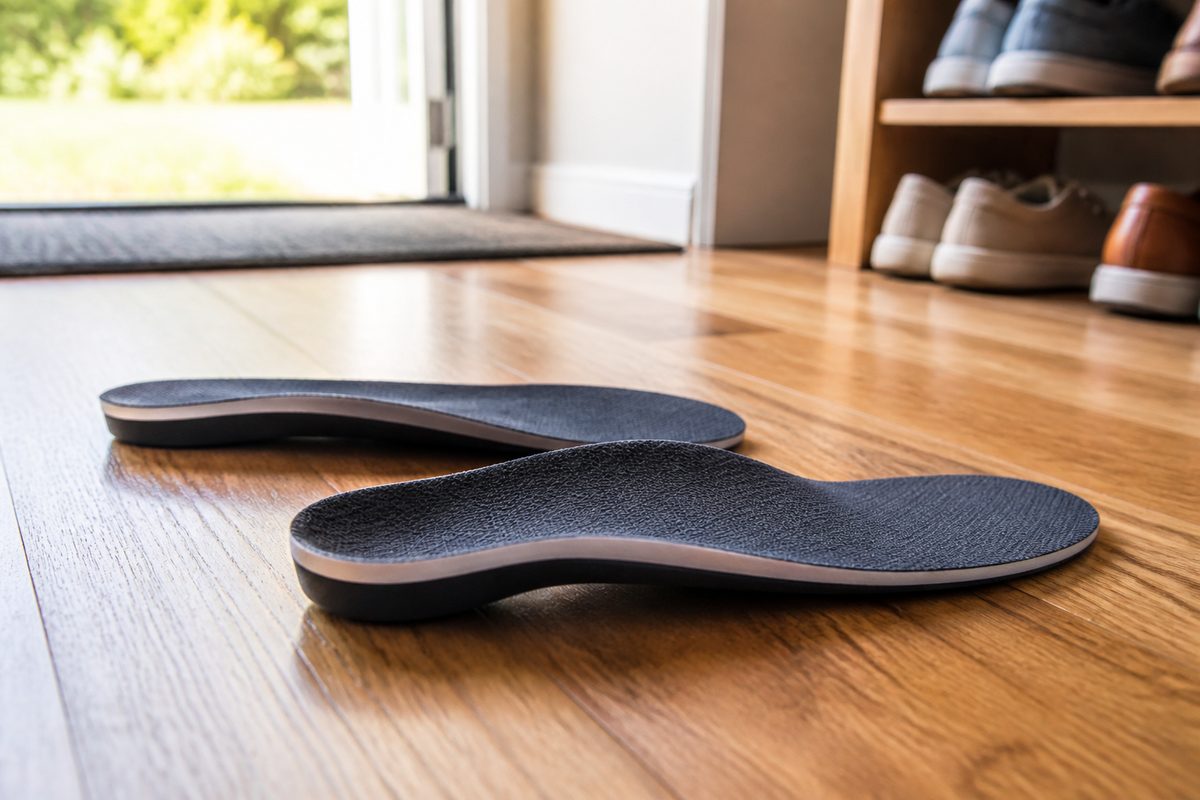
Most custom orthotics last 3 to 5 years, while store-bought foam and gel inserts last 6 to 12 months. Those numbers move up or down based on what the device is made of, how much you weigh, how often you wear it and what shoe it sits in. A pair of carbon-fibre orthotics worn by a desk worker can pass the ten-year mark. A soft foam pair worn by a nurse on twelve-hour shifts can be flat in four months.
The useful question is not just the average. It is how to tell when your own pair has stopped doing its job. This article gives you the lifespan by material, the factors that shorten it and the exact checks to run at home.
What Decides How Long an Orthotic Lasts?
Three things decide it: the material, the load and the shoe. Material sets the ceiling. Load decides how fast you reach it. The shoe decides whether the device keeps its shape along the way.
Every orthotic does the same basic job. It holds your foot in a better position and spreads pressure so no single spot takes the hit. Each step compresses the material a little. Over millions of steps, the material loses its spring. A person who walks 8,000 steps a day takes about 3 million steps a year. That is a lot of squeezing.
I see the same pattern again and again. Two people buy the same device on the same day. One still has a crisp, supportive pair four years later. The other needs a new pair at 18 months. The difference is almost never the device. It is the person wearing it.
How Long Does Each Material Last?
Here are realistic ranges for the most common builds.
- Soft foam: 6 to 12 months. Foam is comfortable on day one, but it packs down fast. Once it flattens, it cushions nothing and supports nothing.
- Gel: 6 to 12 months. Gel absorbs shock well at the heel, yet it slowly migrates and thins under the high-pressure spots.
- Semi-rigid plastic or polypropylene: 3 to 5 years. The shell holds its shape well. The top cover usually wears out first.
- Cork and leather blends: 2 to 4 years. They mould nicely to the foot but dry out and compress with sweat and heat.
- Carbon-fibre reinforced polymer: 5 to 10 years. This material is thin, stiff and very hard to fatigue. The shell rarely fails. The cushioning layer on top is what you replace.
Notice the pattern. Soft materials feel better early and die early. Rigid materials feel firmer early and last far longer. If you want a pair that stays useful for years, ask for a rigid shell with a replaceable cover.
Do Prefabricated and Custom Orthotics Age Differently?
Yes. A prefabricated shoe insert is made in a factory to fit an average foot. It is built to a price, so makers lean on foam and thin plastic. Plan on replacing one every 6 to 12 months if you wear it daily.
A custom orthotic is made from a mould or scan of your own foot. The lab can choose a stronger shell and match its thickness to your weight and activity. That is why custom pairs cost more and last longer. When you divide the price by the years of use, the gap often closes.
One of my clients bought a $40 pharmacy insert every spring for six years. She spent about $240 and never had a pair that held its shape past the summer. She finally paid for a custom pair with a rigid shell. It lasted four years. Her cost per year dropped, and her heel pain stopped coming back each autumn.
Does Body Weight Change How Long They Last?
Weight matters more than most people think. Every step puts a force on your foot of roughly one to one and a half times your body weight when walking. When running, that rises to two or three times. A heavier person compresses the same material faster than a lighter person does.
This does not mean heavier people need a worse device. It means they need a firmer one. A 100 kg person in a soft foam insert will flatten it in a few months. The same person in a rigid shell with a thin cover can get years out of it. Tell your clinician your weight and your daily routine. They can match the density of the material to the load.
When I tried to help a warehouse worker who stood on concrete for ten hours a day, we skipped the soft options. We chose a firm shell with a replaceable top cover. He swapped the cover every year and kept the shell for five.
Why Does Activity Level Matter So Much?
Hours of wear count more than calendar years. A pair worn eight hours a day wears out about twice as fast as a pair worn four hours a day.
Running is the hardest use. Runners often wear out the cover and cushion in 12 to 18 months, even in a durable device. Walkers and office workers get much longer life. People who switch between several pairs of shoes and move one orthotic between them also add wear, because the device keeps getting bent and shifted in and out.
If you use an orthotic for sport, think about a separate pair for training and a separate pair for daily life. Each pair lasts longer, and each can be built for its own job.
How Does Your Footwear Affect the Orthotic?
A shoe is the orthotic's working environment. A worn-out shoe ruins a good device. If the midsole is collapsed on one side, the orthotic tilts with it and stops holding your foot where it should be.
Look at three spots on the shoe: the heel counter, the midsole and the outsole. Wait. That list needs a point of its own, so here it is in plain terms. If the back of the shoe leans inward or outward, the heel sits on a slope. If the midsole creases deeply, the support underneath has gone. If the outsole is worn through on one edge, your gait is already tilted.
A good rule is to replace running shoes every 500 to 800 km and everyday shoes when the sole is visibly uneven. Your orthotic can only be as good as the footwear under it.
Fit matters too. An orthotic crammed into a narrow shoe curls at the edges and cracks sooner. Remove the factory insole first so the device sits flat, and choose shoes with a removable insole and enough depth.
What Wears Out First?
Almost always the top cover and the heel. The heel of the orthotic takes the first impact on every step, so it compresses and thins first. The cover rubs against your sock and absorbs sweat, so it frays and cracks.
The shell underneath often survives much longer. This is why many labs offer re-covering. A new top layer costs a fraction of a new pair and can restore comfort and grip. If the shell itself has not cracked or flattened, re-covering is the smart move.
How Can You Tell Your Orthotics Are Done?
Do these checks every few months. They take two minutes.
- Look at the heel. Is the cushion thin, shiny or cut through? Does one side look worn down more than the other?
- Press the arch. A good arch pushes back. If you can squash it flat with your thumb and it stays flat, the support is gone.
- Place it on a table. It should rock very little. A warped orthotic wobbles or lifts at an edge.
- Check for cracks. Hairline cracks in the shell mean the structure has failed.
- Compare to a new one. If you have a photo from the day you got it, the difference in shape is easy to see.
Your body gives the most reliable signal. If the pain you had before comes back, the orthotic is likely worn out. People with plantar fasciitis often notice this first. The sharp heel pain on the first steps in the morning returns, and it tells you the support has faded before the device looks damaged. I know this because a client of mine came back after three years with the same morning pain she started with. Her orthotic looked fine from the outside. The arch had sagged by several millimetres, and that was enough.
Is a Worn Orthotic Worse Than No Orthotic?
It can be. A flattened or warped device does not just stop helping. It can push your foot into a poor position. A heel that is worn on one side tilts the whole foot. That small tilt, repeated thousands of times a day, loads the ankle, knee and hip in ways your body did not choose.
People often keep old orthotics because they feel familiar and comfortable. Comfort is not proof of function. A soft, flat insert feels pleasant and does nothing. If your symptoms are creeping back, trust the symptoms over the feel of the device.
How Can You Make Your Orthotics Last Longer?
A few habits add months or years.
- Rotate shoes. Give each pair a day to dry out. Moisture breaks down covers and glues.
- Keep them off heat. Do not leave them on a radiator, in a hot car or in a dryer. Heat warps plastic and shrinks foam.
- Clean them gently. Wipe with a damp cloth and mild soap. Air dry. Skip harsh chemicals.
- Move them with care. Do not bend a device to force it into a tight shoe.
- Use them as directed. Wearing a device for activities it was not built for speeds up wear.
Also book a check-up. A clinician can spot early wear and tell you whether a re-cover will do or a full replacement is needed. Once a year is a sensible rhythm for most adults, and every six months suits heavy users and runners.
Does Insurance or a Warranty Change the Schedule?
Often, yes. Many insurers cover one pair every one to three years, and some labs back their shells with a warranty against cracking. Check the terms before you buy. If your plan only pays every two years, you may want to pay for the re-cover yourself in between so the device keeps working.
Do not stretch a pair just to match the insurance calendar. If your pain is back at 18 months, a clinician's note about functional failure can sometimes support an earlier claim.
Do Children Need Replacements Faster?
Yes, but for a different reason. A child's foot grows quickly. A device that fit in January can be too short by the next year. Children's orthotics often need to be replaced every 12 to 18 months, even if the material still looks fine. Check the toe space each time you buy new school shoes.
Your Next Step
Take your orthotics out of your shoes tonight and run the five checks above. Look at the heel, press the arch, set them on a flat table, scan for cracks and ask yourself whether your old pain has crept back. If two or more checks fail, book a visit and ask about a re-cover or a new pair. If you are buying new, choose a rigid shell, tell your clinician your weight and daily routine and put the device in shoes that are in good shape.