
What Are the Different Types of Orthopedic Surgery?
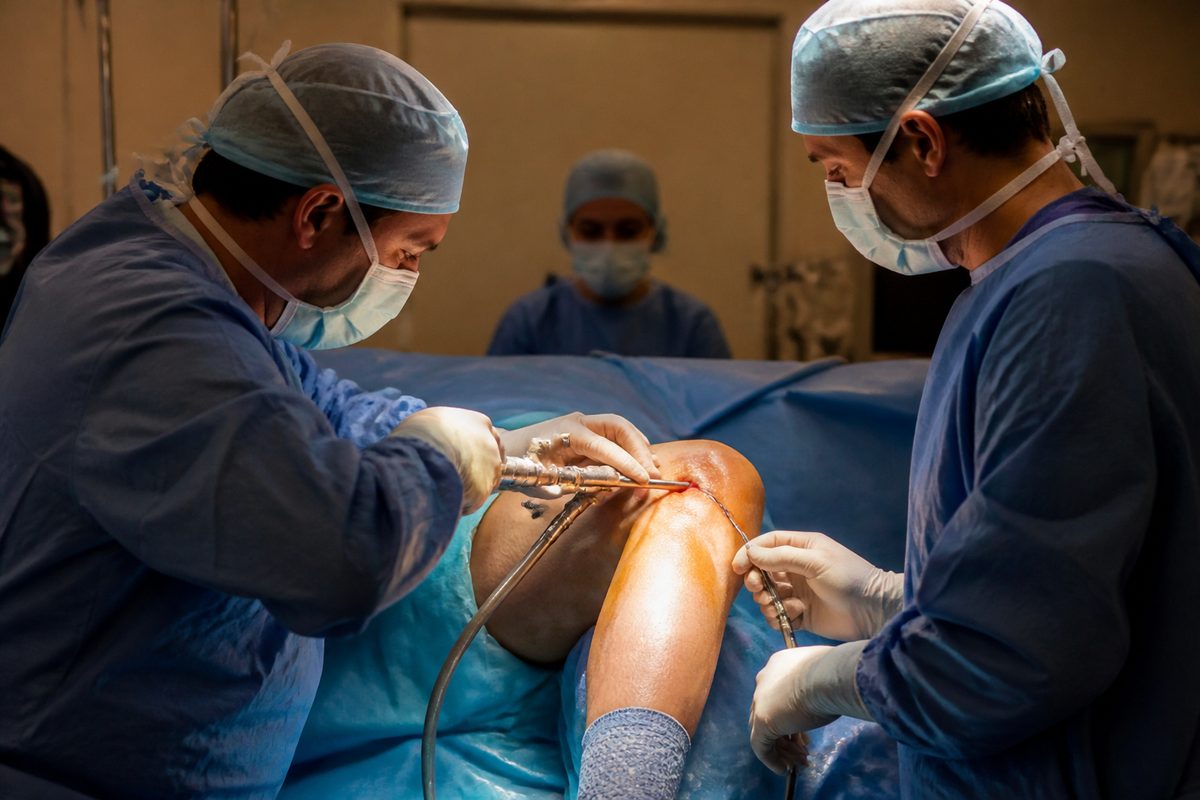
Orthopaedic surgery is grouped by body region (knee, shoulder, hip, spine, hand and wrist, foot and ankle) and by purpose: repairing tissue, removing damaged tissue, replacing a joint or realigning bone. Once you know the region and the purpose, most operation names make sense. The more useful question is not which surgeries exist but which one, if any, fits your confirmed diagnosis.
Orthopaedics is a medical specialty built around the human musculoskeletal system: bones, joints, ligaments, tendons, muscles and nerves. This guide walks through each region, then shows how to judge whether an operation is the right next step.
How Is Orthopedic Surgery Organized?
Think of it as a map with two axes. The first axis is where the problem sits. The second is what the surgeon is trying to do there.
By region, the main groups are:
- Knee
- Shoulder
- Hip
- Spine
- Hand and wrist
- Foot and ankle
By purpose, the main groups are:
- Repair: stitching or reattaching a torn tendon, ligament or other soft tissue.
- Removal: trimming or taking out damaged tissue, such as a torn piece of cartilage.
- Replacement: swapping a worn joint surface for an implant.
- Realignment and stabilisation: fixing a broken or misshapen bone with plates, screws, rods or fusion.
This is an editorial way to organise the topic. It is not an official classification. It works because it matches how surgeons and patients talk about operations in real life.
What Is Knee Surgery?
The knee is a common site for orthopaedic operations because it carries your body weight and takes constant stress. Common knee procedures include meniscus trimming or repair, ligament reconstruction and total or partial knee replacement.
Meniscus surgery
The meniscus is the cushion of cartilage between your thigh bone and shin bone. A meniscus tear can happen in a sudden twist, or it can develop slowly with age. The surgeon can sew the tear back together or trim away the torn edge through small incisions. That trimming, called arthroscopic partial meniscectomy, is one of the most common orthopaedic procedures.
Common does not mean always useful. In a trial of middle-aged adults with a degenerative meniscal tear and no knee arthritis, patients who had the real procedure improved no more than patients who had a sham operation. For that group, the surgery did not beat a placebo procedure. A tear from a sudden injury in a young athlete is a different situation, and the answer there may differ.
Anterior cruciate ligament reconstruction
The anterior cruciate ligament (ACL) keeps your shin bone from sliding forward under your thigh bone. When it tears, the knee can give way during pivoting. Anterior cruciate ligament reconstruction replaces the torn ligament with a graft, often taken from a tendon. Surgeons usually do this through small incisions with a camera. Most people who need it are active, and the knee feels unstable in sport or sometimes in daily life.
Knee replacement
When the cartilage is worn down by arthritis, a surgeon can resurface the joint with metal and plastic parts. This is joint replacement, and it targets end-stage wear. It is not a treatment for a small tear or a mild ache.
What Does Shoulder Surgery Involve?
The shoulder moves more freely than any other joint, which makes it easy to injure. The most common surgical targets are the rotator cuff, the labrum, the joint surface and the collarbone area.
A rotator cuff tear is a tear in one of the four tendons that hold the arm in the socket and lift it. Surgeons usually repair these by anchoring the tendon back to the bone. One of those tendons, the subscapularis, is torn more often than once believed. Arthroscopy made these tears easier to spot, and they usually come from gradual wear or impingement rather than a single injury. They tend to cause pain at the front of the shoulder and trouble rotating the arm inward, and MRI shows them more clearly than other imaging.
Other shoulder operations include repairing a torn labrum after a dislocation, shaving bone that pinches the tendons, and shoulder replacement for severe arthritis.
What Types of Hip Surgery Are There?
Hip surgery splits into two broad families: preserving the joint and replacing it.
- Joint preservation: arthroscopic repair of the labrum, reshaping bone that pinches the joint, and realigning the socket.
- Replacement: total or partial hip replacement, often after arthritis or a hip fracture.
Hip dysplasia is a good example of why timing matters. In hip dysplasia, the socket is too shallow to hold the ball of the thigh bone well. In a young person, a surgeon may reshape the socket to protect the joint. Left alone for decades, the same shallow socket can wear the cartilage until replacement becomes the only option. The same diagnosis leads to different operations at different ages.
What Is Spine Surgery?
Spine procedures aim at one of two problems: pressure on nerves or an unstable segment of the spine.
- Decompression: removing bone or disc material pressing on a nerve, such as a discectomy or laminectomy.
- Fusion: joining two or more vertebrae so they heal as one solid piece, often using bone grafting to help the bones knit together.
- Deformity correction: straightening a curve such as scoliosis with rods and screws.
Back pain alone rarely decides this. Surgeons look for nerve symptoms, weakness, or instability that matches what the scan shows. A scan that looks bad in a person with no symptoms is not a reason for an operation.
What Surgery Is Done on the Hand and Wrist?
Hand surgeons work in tight spaces where small errors matter. Typical operations include carpal tunnel release, tendon repair, fracture fixation in the wrist and fingers, and joint replacement in the thumb or knuckles. Many of these are quick, done under local or regional numbing, and use small incisions. The gain in function can be large because the hand does so much fine work.
What Does Foot and Ankle Surgery Cover?
Foot and ankle surgery handles bunions, flat feet, Achilles tendon tears, ankle fractures, ankle ligament repairs and ankle arthritis. Some operations fuse a painful joint. Others reposition bones so the foot bears weight properly. Because you stand on these joints all day, recovery often requires staying off the foot or using a boot for weeks.
Which Orthopedic Surgeries Fall Under Trauma, Sports and Cancer Care?
Some orthopaedic work is defined by the cause, not the body region. These groups cut across the map above.
- Trauma surgery: fixes broken bones and damaged joints after accidents or falls. Surgeons use plates, screws and rods to hold bone in place while it heals. The goal is a stable, correctly aligned limb.
- Sports medicine: focuses on injuries from athletic activity and overuse, such as ACL tears, meniscus injuries and shoulder instability. Not every sports medicine patient is an athlete. Weekend gardeners get the same injuries.
- Orthopaedic oncologist care: an orthopaedic oncologist treats tumours of bone and soft tissue. The surgery may remove the tumour and rebuild the area with an implant or bone grafting, with the aim of saving the limb when possible.
Where Do Minimally Invasive Surgeries Fit?
Minimally invasive surgeries are a method, not a body region. The surgeon uses small cuts, a camera and thin instruments instead of one large opening. Arthroscopy in the knee, shoulder and hip is the best-known example. The benefit is usually less tissue damage and often a quicker start to recovery.
A smaller incision does not make an operation more useful. A keyhole procedure that does not match your problem is still the wrong procedure. The method matters less than the reason for the operation.
How Do You Know Whether Surgery Is the Right Choice?
Start with the diagnosis. A recommendation should rest on a confirmed cause of your symptoms, often with imaging such as MRI. This is an editorial point, not a study finding, but it is the safest starting place. If nobody can tell you exactly what is wrong, you are not ready to choose an operation.
Then ask four direct questions:
- What exactly is this operation expected to fix in my case?
- What happens if I wait?
- Was a non-surgical option tried or considered?
- What does recovery require from me, and for how long?
Picture a 52-year-old with knee pain and a meniscus tear on MRI. A surgeon offers to trim it. The tear looks serious on the scan, so surgery feels like the obvious move. Yet the sham-surgery trial above suggests that, for this kind of degenerative tear without arthritis, the operation may not do more than a placebo. This scenario is hypothetical, and it shows why the second and third questions matter most.
What Role Do Physical Therapy and Other Non-Surgical Care Play?
Physical therapy is often the first thing to try. Guided strengthening and movement training can settle many knee, shoulder and back problems. Other forms of therapy, such as activity changes, bracing, medication or injections, also come before surgery in many cases. This is general practice rather than a finding of the studies cited here, so ask your own surgeon how it applies to you.
Surgery still has a clear place. A displaced fracture, a torn ligament in an unstable knee, a worn-out hip that no longer lets you walk comfortably, or a nerve being crushed in the spine can all call for an operation. Rehab also matters after surgery. Even a well-done repair fails if the recovery plan is ignored.
What Is a Smart Way to Get a Second Opinion?
Bring your imaging and notes to a second surgeon. Ask them to explain the diagnosis in plain words, without reading from your first surgeon's plan. If both explain the same cause and the same reason for the operation, you can feel more confident. If their reasons differ, ask why. Surgeons who work in different subareas, such as sports medicine or joint replacement, may weigh options differently, and that is useful information.
What Should You Do Next?
- Name your problem by region and by purpose: which joint, and whether it needs repair, removal, replacement or realignment.
- Get a confirmed diagnosis, with imaging if your clinician recommends it.
- Ask what the operation should achieve for your exact problem, and whether a non-surgical option was considered.
- If you were offered surgery for a degenerative meniscus tear, ask directly how the surgeon expects it to beat other care.
- Get a second opinion before any large or irreversible procedure.
Surgery is a tool. Pick it because it fits the problem, not because it is available.
Sources
- Sihvonen R, Paavola M, Malmivaara A, Itälä A, Joukainen A, Nurmi H, et al. (2013) "Arthroscopic partial meniscectomy versus sham surgery for a degenerative meniscal tear" The New England journal of medicine. PMID: 24369076
- Longo UG, Berton A, Marinozzi A, Maffulli N, Denaro V (2012) "Subscapularis tears" Medicine and sport science. PMID: 21986050