
What Does "Orthopaedic" Mean?
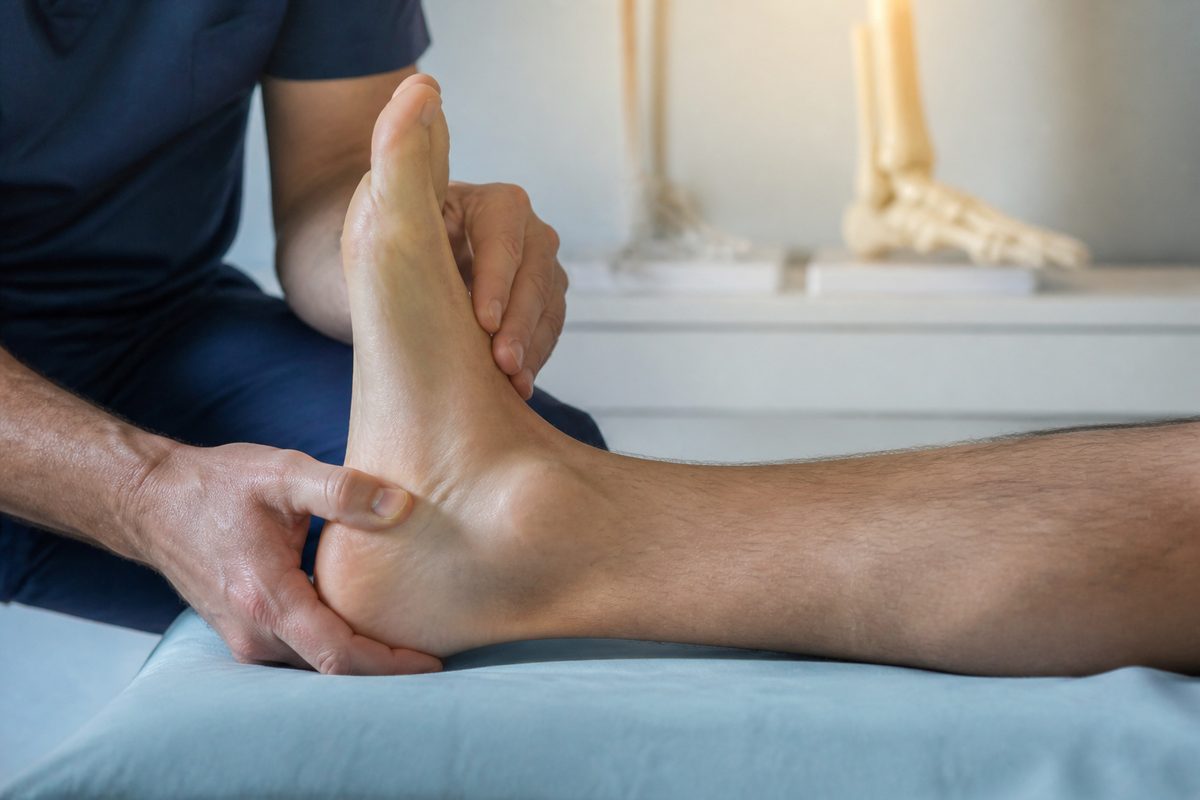
"Orthopaedic" means relating to the straightening and care of the bones, joints and the tissues that move them. The word comes from two Greek roots: orthos, meaning straight or correct, and paidion, meaning child. Put together, it first described the art of keeping a child's body straight. Today it covers people of every age, and it names a whole branch of medicine.
That history matters because it explains the word's odd shape. It sounds like a children's term, yet your grandfather's new hip is an orthopaedic matter. Once you see how the word grew, you can read it as a clue about what a clinic, a brace or a specialist actually does.
What are the two halves of the word?
Split it in the middle. Ortho means straight, upright or correct. You see it in orthodontist, who straightens teeth, and in orthodox, which means "right belief." The second half, paed, means child. You see it in paediatrics, the medicine of children.
So the literal meaning is "straight child." Nobody uses it that narrowly now. The first half survived and the second half faded into the background. When a doctor says orthopaedic today, the live idea is correction and support of the body's frame.
I know this because I have watched the word confuse people. A client of mine once told me he skipped an appointment because he assumed an orthopaedic clinic was for kids. He was fifty-eight, with a knee that locked on stairs. He lost three months of treatment over a word.
Who invented the word, and what did he mean?
A French physician named Nicolas Andry coined it. In 1741 he published a book whose title translates roughly as Orthopaedia: or the Art of Correcting and Preventing Deformities in Children. He wrote it for parents and doctors who saw twisted spines, bowed legs and crooked limbs and wanted a plan.
Andry gave the field its symbol too. He drew a young, crooked tree tied to a straight stake. The idea was simple: guide the growing body gently and steadily, and it will grow straight. That tree image is still the logo of many orthopaedic societies, which tells you how much of Andry's thinking lives on.
Here is the angle most articles miss. Andry did not think of orthopaedics as an operating room word. His tools were posture, bandages, exercise and splints. Surgery came into the field much later. So the original meaning is closer to "guided correction" than to "cutting." When you hear the word, do not assume a knife is coming.
How did a children's word grow to cover adults?
Medicine kept finding that the same tools worked on grown bodies. A splint that held a child's crooked limb also held an adult's broken one. A brace that guided a growing spine could support a worn one. Doctors who fixed deformities began fixing injuries and wear, and the name stayed because no better one appeared.
By the twentieth century, wars and industrial accidents sent huge numbers of adults with shattered limbs to these doctors. The field became about restoring function at any age. The word kept its old shape while its job doubled in size.
Which parts of the body does the word point to?
It points to the human musculoskeletal system. That is the frame and the moving parts together: bones, joints, cartilage, ligaments, tendons and muscles. Each does a separate job. Bones hold you up. Joints let bones meet and move. Ligaments tie bone to bone. Tendons tie muscle to bone. Muscles pull.
Orthopaedic care sits wherever one of those parts fails. It does not cover the brain or the nerves in general, although nerves that run through the limbs and spine often matter to the work. It does not cover internal organs. If the problem is in the structure you can feel under your skin when you move, the word probably applies.
What does the word mean when a surgeon uses it?
Orthopedic surgery is the operating branch of the field. American writers drop the "a" and write orthopedic, but the meaning is identical. Four jobs make up most of the surgical work.
- Repairing a bone fracture. A bone fracture is a break. Many heal in a cast. Others need surgery to line the pieces up again.
- Holding the repair in place. Internal fixation means using plates, screws, rods or pins inside the body to keep broken bone steady while it knits. The hardware does the holding so the bone can do the healing.
- Replacing worn joints. Joint replacement swaps a damaged joint surface, most often in the hip or knee, for a metal and plastic implant. People choose it when cartilage is gone and pain rules their day.
- Joining spine bones. Spinal fusion welds two or more vertebrae into one solid piece. It is used when movement between them causes pain or danger, such as with an unstable segment.
Notice the pattern. Each job either mends a break, replaces a failed part or locks a moving part so it stops hurting. That is still "straightening and correcting," just with modern materials. Andry's stake and string became a titanium plate.
One of my clients broke her wrist in a fall and expected a cast. The X-ray showed the bone had shifted. Her surgeon used internal fixation, a small plate and a few screws. She told me later that the word "surgery" scared her until she learned it meant holding the bone still from the inside, which is the same goal a cast has.
Does orthopaedic always mean surgery?
No, and this is the most common mistake. Most orthopaedic patients never reach an operating room. Surgeons themselves often try other routes first, because many problems settle without an operation.
Two routes carry most of the load.
- Physical therapy. A therapist builds strength, range and control around a weak joint or healing bone. It is the front line for sprains, tendon trouble, back strain and recovery after surgery. A surgeon can fix the structure, but only the work afterward teaches the body to use it.
- Pain management. This covers medicines, injections, bracing, activity changes and other methods that lower pain enough for you to move and heal. Good pain control is not a sign of weakness. It lets you do the therapy that fixes the cause.
So when your doctor refers you to an orthopaedic clinic, the visit often ends with a plan for exercise and pain control rather than a surgery date. In my experience, people who expect a knife and get a therapy plan feel relieved. People who expect advice and hear "surgery" need a minute. Both outcomes sit under the same word.
Where does a sports injury fit?
A sports injury is one of the most common reasons adults first meet the word. A torn knee ligament, a dislocated shoulder or a stress fracture in a runner's shin all belong to the musculoskeletal system, so they belong to orthopaedics. Many clinics also have sports medicine doctors who focus on athletes and active people, and the two groups work closely together.
A weekend footballer I worked with twisted his knee and kept playing for two more weeks because "it was only a sports thing." It turned out to be a torn ligament, and the delay made the damage worse. Calling an injury sporty does not make it minor. If a joint gives way, swells fast or locks, treat it as orthopaedic and get it checked.
Why are there two spellings?
It is a simple split in English. British, Australian and many other countries keep the "ae" from the Greek paid. The United States simplified it to "e." The same thing happens with paediatric and pediatric, or anaemia and anemia.
The meaning does not change. Search either spelling and you reach the same doctors, the same procedures and the same research. Use the spelling that matches your country, and do not worry that you picked the wrong one.
What does the word tell you when you see it on a door or a referral?
It tells you the problem is about structure and movement. That is useful for sorting where to go.
- If you have a break, a joint that fails, a back or neck problem tied to the spine, or an injury from sport or a fall, orthopaedic is the right territory.
- If you have widespread joint pain with swelling and stiffness in the morning, a rheumatologist often leads first, because the cause may be an immune condition.
- If you have numbness, weakness or tingling with no clear injury, a nerve specialist may need to weigh in.
An orthopaedic doctor will often tell you honestly when the problem belongs elsewhere. Referrals across these fields are normal and do not mean you went to the wrong place.
What do most people get wrong about the word?
They make three... no, they make two big errors. First, they think it means children only. It does not, and it has not for a long time. Second, they think it means surgery. Most care under this label is movement, rehab and watchful waiting.
A smaller error hides behind those two: assuming an orthopaedic product is a medical device. Orthopaedic pillows, shoes and mattresses use the word loosely to suggest support for the body's frame. Some are well designed. Some are just marketing. The word on a label guarantees nothing, so check what the item does for your specific problem.
What should you do next?
Use the word as a map, not a warning. Here is how:
- Name your problem by body part. If it is a bone, joint, ligament, tendon or muscle, book an orthopaedic or sports medicine visit.
- Do not wait because the word sounds like surgery. Most visits end with an exam, imaging and a plan.
- Ask what happens if you try physical therapy and pain control first, and how long to give them before deciding on anything bigger.
- Bring a short note listing when the problem started, what makes it worse and what you have already tried.
Andry's crooked tree needed guidance early, not rescue late. Your body works the same way. Get the joint or bone looked at while the fix is still simple.