
What Does "Orthopedic" Mean for Kids?
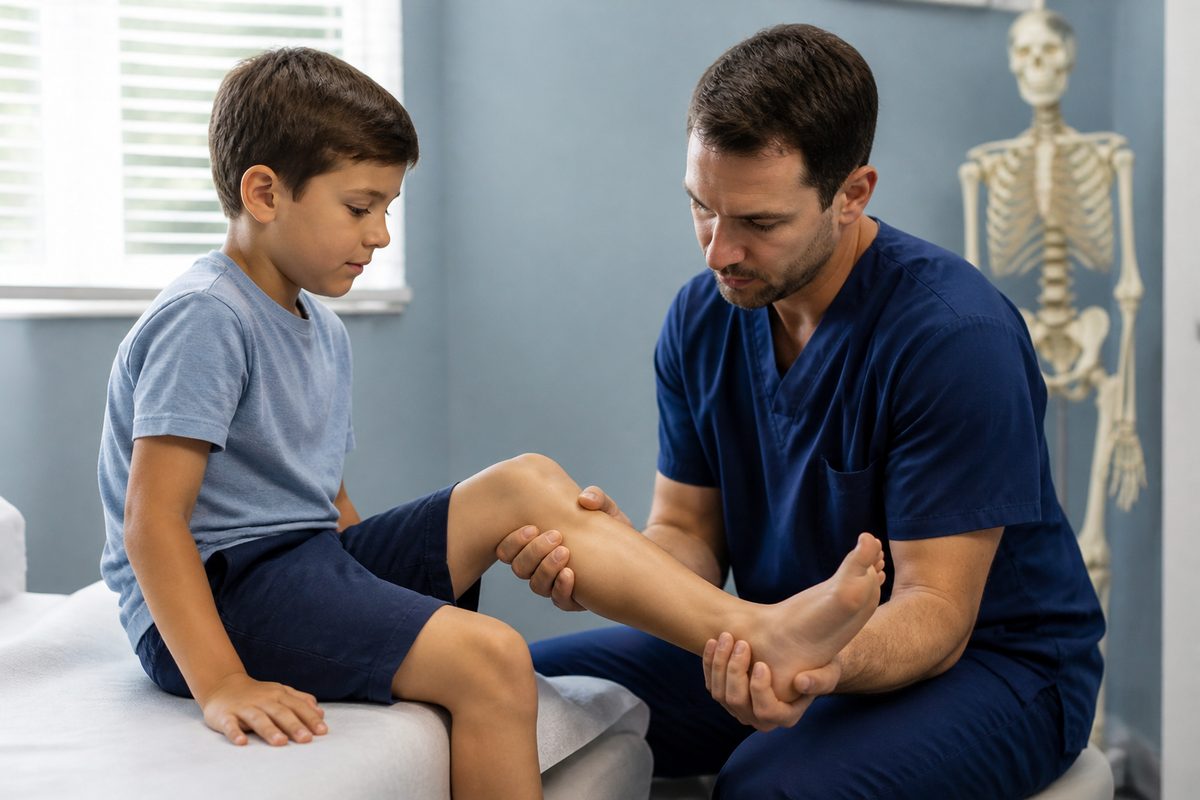
For kids, "orthopedic" means anything to do with the health of growing bones, joints, muscles and the tissues that connect them. A pediatric orthopedic doctor looks after how a child's frame develops, and fixes problems when it does not develop the way it should. That covers a bent foot in a newborn, a broken wrist from the monkey bars and a limp that will not go away. It does not always mean surgery. Most children who see an orthopedic doctor never need an operation.
This article explains what the word means in a child's world, why children need their own kind of bone specialist, and how to tell when your child needs one.
Where does the word come from?
The word comes from the Greek language. "Orthos" means straight. "Pais" means child. Put them together and you get "straight child." French physician Nicolas Andry coined the term in 1741 for a book about preventing and fixing body deformities in children. He even drew a crooked tree tied to a straight stake on the cover.
That origin matters. The field started with kids. Adult joint care came later. So when a parent asks what orthopedic means for children, the honest answer is that children were the original reason the word exists.
Today the idea of "straight" is wider. Doctors care less about how a child looks and more about how the body works and grows. A slightly bowed leg in a toddler is often normal. A perfectly straight-looking hip can still be damaged underneath.
What does a pediatric orthopedic doctor actually look after?
They look after the human musculoskeletal system. That is the full frame: bones, joints, muscles, tendons, ligaments and the growth plates inside a child's long bones. Spine, hips, knees, feet and arms all fall under it.
They do three jobs. They find out what is wrong. They decide whether the body will fix itself with time or needs help. And they guide treatment, from a simple brace to a full operation.
One of my clients, a mother of a six-year-old, told me she walked into her first visit expecting to hear the word "surgery." She walked out with a stretching plan and a recheck in four months. That is far more typical than most parents fear.
Why can't a child just see an adult bone doctor?
Because a child is not a small adult. A child's skeleton is still being built. Adult bones are finished. Child bones are working sites.
Here is the key difference. Children have growth plates, soft zones of cartilage near the ends of long bones where new bone forms. These plates are weaker than the bone around them. A fall that would sprain an adult's ankle can crack a child's growth plate instead. If that injury is missed, the leg may grow short or crooked.
Kids also heal fast. A child's bone fracture can mend in a few weeks, and growing bone can even straighten itself out over time. A pediatric specialist knows which crooked bones to leave alone and which to correct now. An adult-focused doctor may get that call wrong.
Many angles on this topic miss one more point: timing is a treatment. For some childhood conditions, the right move is to wait and watch. For others, a delay of a few months changes the outcome for life. Knowing which is which is the real skill.
Which conditions bring kids to an orthopedic doctor?
These are the ones that come up most often.
Hip dysplasia
In hip dysplasia, the hip socket is too shallow, so the ball of the thigh bone does not sit snugly inside. Doctors screen newborns for it. Babies caught early often fix it with a soft harness worn for a few weeks to months. Missed cases can lead to limping and early joint wear.
Clubfoot and the Ponseti method
Clubfoot means a baby's foot turns inward and down at birth. The Ponseti method fixes it without a big operation in most cases. The doctor gently stretches the foot and applies a new cast each week for several weeks. A small tendon release is often done near the end, then the child wears a brace at night for years to keep the correction. When I watched a family go through this, the part that surprised them was the brace. The casts took weeks. The brace took years. Families who stuck with it kept the result.
Legg–Calvé–Perthes disease
Legg–Calvé–Perthes disease usually shows up between ages four and eight. Blood flow to the ball of the hip joint drops, and the bone there softens before it slowly rebuilds. The child may limp and complain of knee or thigh pain. Treatment aims to protect the shape of the ball while it heals. That can mean rest, movement exercises, bracing or surgery, depending on age and how much bone is affected.
Slipped capital femoral epiphysis
Slipped capital femoral epiphysis, often shortened to SCFE, is a condition of older children and young teens, usually between about ten and sixteen. The ball of the hip slips off the neck of the thigh bone at the growth plate. The oddest sign is knee pain, because hip trouble can feel like it comes from the knee. This one needs prompt care. Treatment is usually a surgical screw to hold the ball in place and stop further slipping.
Broken bones
A bone fracture is the most common reason a child ends up in an orthopedic clinic. Many are simple and heal in a cast. Breaks that cross a growth plate or move out of line need closer follow-up.
Sports injury
A sports injury in a child differs from the same injury in an adult. Overuse is the big one. Kids who play one sport all year can develop pain where tendons pull on growth plates, in the heel, knee or elbow. Rest and a change in training load fix most of it.
Does "orthopedic" always mean surgery?
No. This is the biggest misunderstanding, and it keeps parents from booking visits.
Orthopedic surgery is one tool in the field, and it is the last one used for most children. The usual order runs from watching, to bracing or casting, to therapy, and only then to an operation if the earlier steps will not do the job.
Physical therapy plays a large part. A therapist teaches a child to stretch tight muscles, build weak ones and move in a safer way. For a child recovering from a broken arm, it brings back strength and range of motion. For a young athlete with overuse pain, it fixes the habit behind the injury. Kids tend to do better when the exercises feel like play, so good pediatric therapists build games into the work.
When surgery is needed, the child's age shapes the plan. Surgeons try to avoid damaging growth plates, and they often pick methods that let the bone keep growing normally.
What happens at the first visit?
The first goal is a clear medical diagnosis. That starts with questions. When did the problem start? Does it hurt at night? Does it change with activity? Did your child fall or train harder lately?
Next comes a physical exam. The doctor watches your child walk, run or hop, checks how far each joint moves and compares one side to the other. Imaging often follows. X-rays show bone shape and growth plates. Ultrasound is the standard tool for infant hips because a baby's hip is mostly cartilage that X-rays cannot see well. MRI is used less often, for cases where the answer is still unclear.
To get the most out of the visit, take a short note about when the symptom began, plus a phone video of the limp or movement if it comes and goes. Kids often walk perfectly in a doctor's office. A video shows what you see at home.
What about orthopedic shoes and products?
You will see "orthopedic" on shoes, insoles, pillows and mattresses. For a healthy child, most of these are not needed. Normal flat feet in toddlers usually turn into normal arches without any insert. Special shoes do not correct them.
Real orthopedic devices exist, and they are prescribed. Night braces after clubfoot correction and custom supports for specific foot problems are two examples. If a doctor has not recommended a product, the word on the box does not mean it will help. Ask your child's doctor first.
When should you book a visit?
Book one when you see any of these:
- A limp that lasts more than a week or two, with no clear cause
- Knee pain with no knee injury, especially in a child between ten and sixteen, because it may be coming from the hip
- A newborn's foot, hip or leg that looks or moves differently from the other side
- Pain that wakes your child at night
- A bump, swelling or crooked look after a fall that does not settle
- One leg that looks shorter, or a back that curves to one side
- A child who suddenly refuses to bear weight or avoids a favourite activity
I know this because a friend of one of my clients waited three weeks on her son's "growing pains." The pain was in his knee, and the cause was in his hip. Early care made a real difference. When a child limps, get it checked. A normal result costs you one afternoon. A missed hip problem can cost years.
On the other side, some things are normal and need no visit. Toddlers often walk with their toes turned in or their legs slightly bowed. Many babies have flexible, flat feet. Doctors usually reassure families and check again at the next routine appointment.
What do most parents get wrong?
They wait too long and worry about the wrong thing. They fear an operation, so they delay the visit. Yet the earlier a problem is found, the more likely it is that a gentle treatment works. Clubfoot treated in the first weeks of life, hip dysplasia caught on a newborn screen and a growth plate injury seen right after the fall all share one feature. Fast action means simpler treatment.
The second mistake is trusting a child to say where it hurts. Young children point to the wrong place or cannot describe pain at all. A child who stops running and starts sitting out games is telling you something with behaviour.
Your next steps
- If your child has a limp, joint pain or a body part that looks different, call your pediatrician and ask for a referral to a pediatric orthopedic doctor.
- Write down when the problem began and what makes it better or worse. Record a short video of the movement.
- Ask the doctor three direct questions: what is the diagnosis, what is the simplest effective treatment, and what happens if we wait.
- Skip the orthopedic products sold in stores until a doctor says your child needs one.
- If a treatment plan includes a brace, cast or exercises, follow it fully. Results depend on the plan being kept up.
In short, orthopedic care for kids means protecting a body that is still under construction. Act early, and the plan is usually gentle.