
Why See an Orthopedic Doctor?
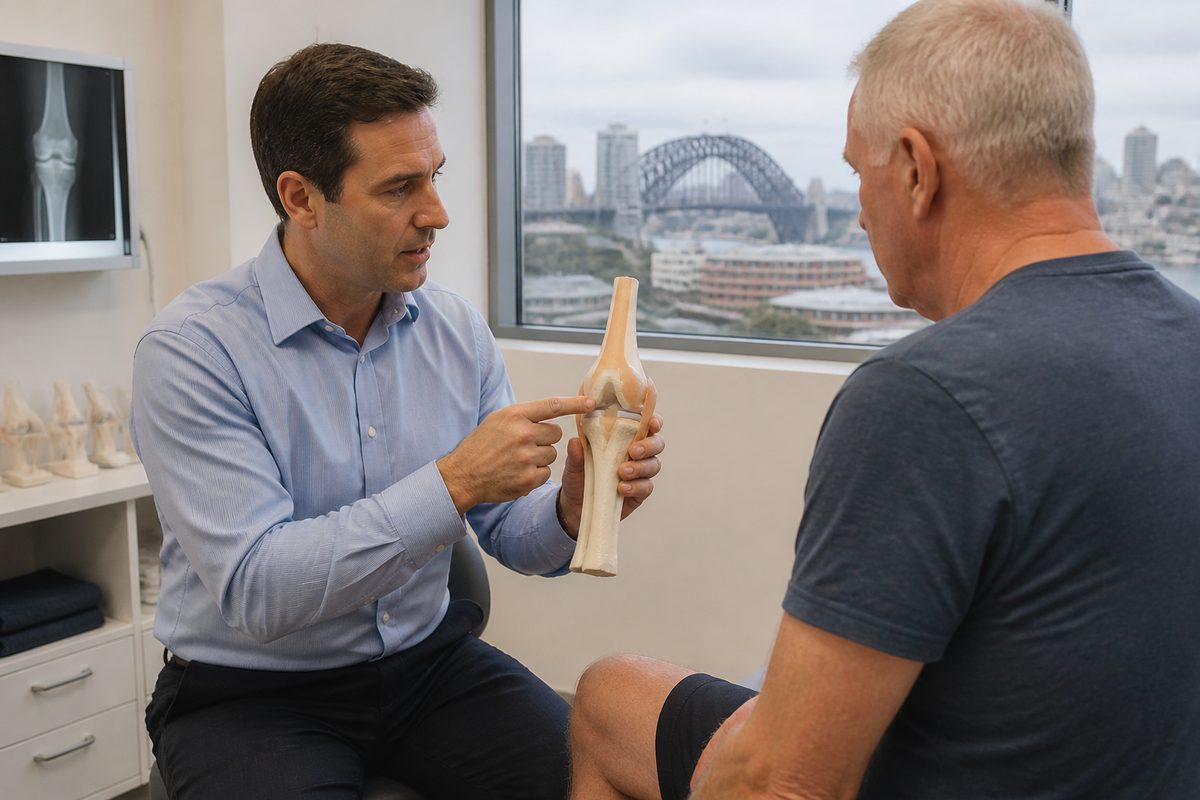
See an orthopedic doctor when a joint, bone or muscle problem lasts, gets worse, or stops you from doing normal things. A specialist gives you a clear diagnosis and a plan early, so you stop guessing. A mild ache that fades in a few days can wait. Most people begin with a primary care physician, and that is a fine first step.
This is our editorial inference, not a study result. The research supports the idea that reaching the right care sooner matters, especially for inflammatory arthritis. It does not say every sore knee needs an orthopedic surgeon. Your own doctor can help you sort that out.
What does an orthopedic doctor actually do?
An orthopedic doctor is a medical doctor who focuses on the human musculoskeletal system. That means bones, joints, ligaments, tendons and muscles. These parts work together every time you walk, lift or reach.
Many people hear "orthopedic" and think of operations. That is only part of the job. Orthopedic surgery is one tool. A large share of visits end with no operation at all. The doctor may suggest a brace, an injection, a change in activity or a course of physical therapy.
The real value is the diagnosis. You walk in with pain and a guess. You walk out with a name for the problem, a reason it happened and a next step.
How common are these problems?
Very common. In one Canadian study, about 24% of adults made at least one doctor visit for a muscle, bone, joint or back problem in a single year. If your knee, shoulder or spine is giving you trouble, you have plenty of company.
Being common does not make it harmless. People often tell themselves it is just age or just a bad night's sleep. Then months pass. Pain that has been there for months is not a minor ache anymore.
Which warning signs mean you should book a visit?
Use these as a plain checklist. Any one of them is a good reason to get seen.
- Pain that lasts. If it has not eased after a few weeks of rest and simple care, stop waiting.
- Pain that grows. Each week feels worse than the last.
- Lost function. You cannot climb stairs, grip a jar, raise your arm or walk your usual distance.
- Swelling, locking or giving way. A knee that buckles or a joint that catches is telling you something is mechanically wrong.
- Night pain. Pain that wakes you up is not the same as stiffness after a long day.
- Numbness or weakness. A tingling hand or a foot that drags can point to a nerve problem.
Some situations are urgent. A deformed limb, a bone sticking out, severe pain after a fall or the inability to put weight on a leg all call for emergency care. A suspected bone fracture should be checked the same day.
Can I start with my regular doctor instead?
Yes, and for many problems you should. A primary care physician knows your whole health picture. They can treat many minor strains, rule out other causes and refer you on when needed.
Think of your primary care physician as the person who reads the map. If the problem looks like a mechanical issue in a bone or joint, they point you to orthopedics. If it looks like an immune problem, such as rheumatoid arthritis, they may send you to a rheumatologist instead. That is not a delay. It is routing you to the right door.
Here is where people get stuck. They wait for the pain to become unbearable before they ask for a referral. A better rule is to ask when the problem has gone past the stage of normal healing.
Why does early diagnosis matter so much?
Because the treatment depends on the cause, and the wrong guess wastes time. A review of rheumatoid arthritis argued that early referral, diagnosis and treatment should be standard, since delays in reaching the right care can change how the disease goes.
The same logic applies more widely, though that is our inference. A torn ligament that is treated early can often be managed more simply. A damaged joint that is ignored may wear down further. Hip and knee problems that limit your life for years can end up needing joint replacement when earlier steps might have bought you more time.
Picture a hypothetical runner with a nagging pain on the outside of the knee. She runs through it for four months. By the time she is examined, the simple fix of a training change and some strengthening has turned into a long recovery. Seeing someone at week three would likely have been easier. This is an illustration, not a case study.
What happens at the appointment?
Knowing what to expect takes some of the fear out of it. A typical visit has a few clear parts.
- Medical history. The doctor asks when it started, what makes it better or worse, what injuries you have had and what you do for work and exercise. Be specific. "It hurts when I go down stairs" tells more than "my knee hurts."
- Physical examination. The doctor looks at the area, presses on it, moves it and tests strength and stability. They may watch you walk or squat.
- Imaging. If needed, an X-ray, ultrasound or MRI adds detail. Not everyone needs a scan. The exam often points the way first.
- Medical diagnosis and plan. You get a name for the problem and a list of options, from simplest to most involved.
Bring a short list of your symptoms, any past scans and the medicines you take. It makes the visit faster and more useful.
Is it always surgery?
No. This is the biggest myth about orthopedics. Most people who see an orthopedic doctor are not scheduled for an operation that week.
Non-surgical care comes first for many conditions. That can include rest, bracing, medicine, injections and structured therapy. Physical therapy is a common choice because it builds strength around a joint and teaches you how to move without overloading it. Good therapy can turn a bad knee into a manageable one.
When surgery is the right answer, the reasons are usually clear. A displaced bone fracture may need internal fixation, where plates, screws or rods hold the pieces in place while the bone heals. A joint worn down by arthritis may need joint replacement when pain and stiffness no longer respond to other care. In my experience the best surgeons are the ones who tell you honestly when you do not need one.
Where do other specialists fit in?
Orthopedics is not the only door. Knowing the neighbours helps you pick the right one.
- Sports medicine doctors focus on active people and training injuries. Some are orthopedic surgeons and some are not. They are a strong choice when your problem started with exercise.
- Physical medicine and rehabilitation doctors, also called physiatrists, treat pain and function without surgery. They are useful for long-term problems, nerve issues and recovery after injury.
- Rheumatologists treat inflammatory and immune conditions that attack the joints.
If you are unsure, ask your primary care physician which one fits. A good referral saves you a second appointment.
What about back pain?
Back pain is among the most common reasons people look for help, and in the Canadian data it accounted for about 7% of the population's visits for these problems. Most episodes ease with time, movement and simple care.
Here is the angle most articles miss. How long it lasts matters less than what comes with it. Back pain alone, improving week by week, can often start with your regular doctor. Back pain with leg weakness, numbness, loss of bladder or bowel control or pain after a hard fall needs prompt attention. That combination is a signal, not a nuisance.
How do I get the most from the visit?
The visit works better when you treat it as a conversation. Tell the doctor what you want to get back to doing. Maybe it is a round of golf, lifting a grandchild or sleeping through the night. A plan built around that goal is easier to follow than a plan built around a scan.
Ask what the diagnosis is, what the options are and what happens if you wait. Ask how long recovery should take. If the answer includes surgery, ask what the non-surgical path would look like and how you would know it is failing.
Then follow through. A plan that includes therapy only works if you do the exercises. Many people feel better after two weeks and stop. The joint is not fixed yet. It is just quieter.
What is the real reason to go?
Time. Every week you guess is a week you could have spent on a plan. A joint, bone or muscle problem rarely fixes itself once it has stuck around, and the cost of waiting is usually more pain and fewer options.
You do not need to be sure it is serious. You only need to know it is not getting better.
What should you do next?
- Give a mild ache a short window of rest and simple self-care. If it is not clearly improving in a few weeks, make the call.
- Write down when it started, what triggers it and what you can no longer do.
- Book your primary care physician, or go straight to an orthopedic doctor if you have a clear injury or lost function.
- Go to emergency care at once for a suspected bone fracture, a deformed limb or sudden weakness.
- Ask for a diagnosis, a non-surgical option and a timeline before you agree to any procedure.
Make the appointment this week. A clear diagnosis is the first thing that actually helps.
Sources
- Power JD, Perruccio AV, Desmeules M, Lagacé C, Badley EM (2006) "Ambulatory physician care for musculoskeletal disorders in Canada" The Journal of rheumatology. PMID: 16395761
- Irvine S, Munro R, Porter D (1999) "Early referral, diagnosis, and treatment of rheumatoid arthritis: evidence for changing medical practice" Annals of the Rheumatic Diseases. DOI: 10.1136/ard.58.8.510