
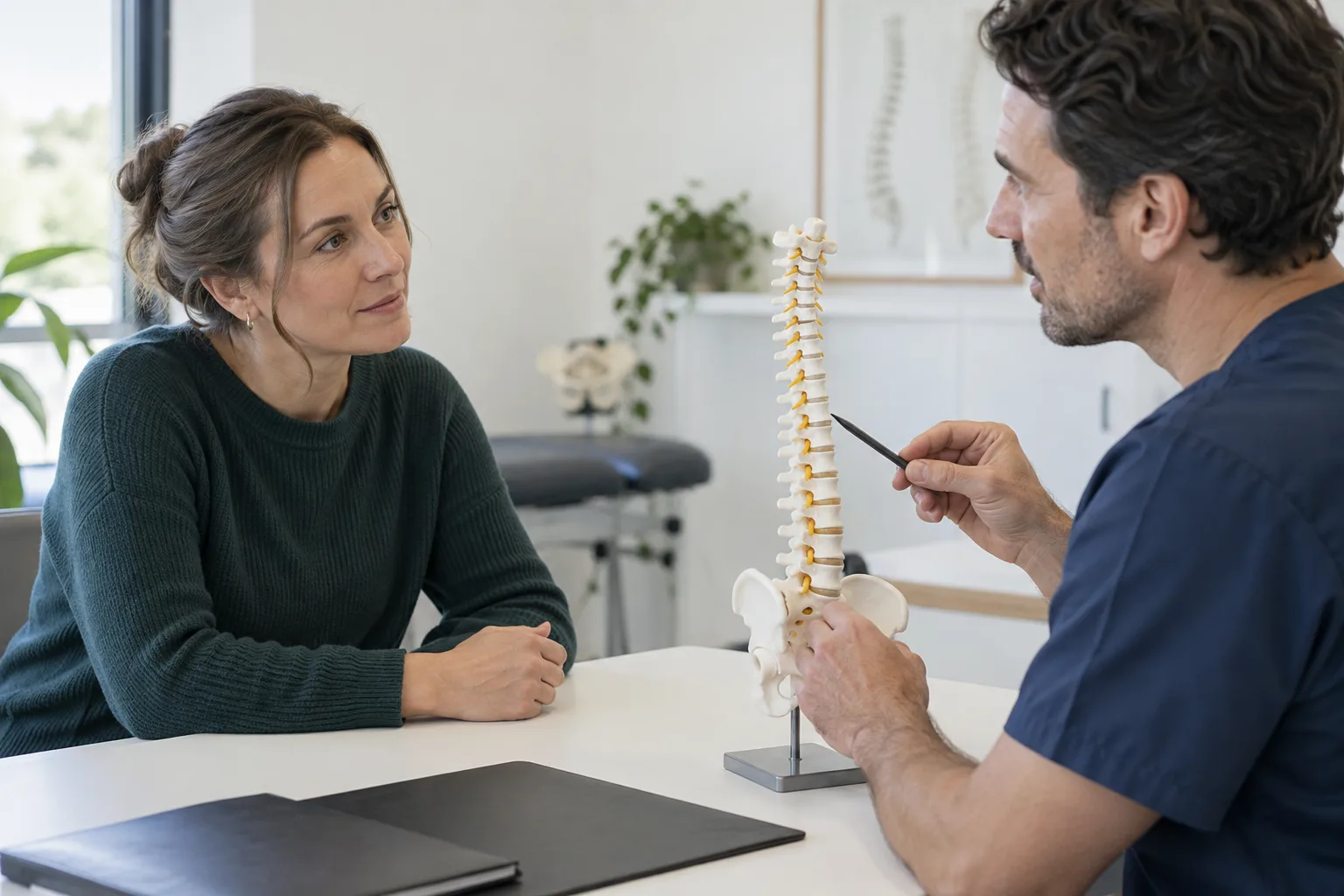
Understanding disc herniation
A disc herniation occurs when inner disc material pushes through its outer layer. It may irritate or press on nearby nerves, causing pain, tingling or weakness.
Treatment and care
Many cases are managed without surgery through guided activity, physiotherapy and pain care. Persistent nerve symptoms or neurological changes may require further specialist treatment.
Questions to discuss with your clinician
Use this guide to prepare for an individual discussion. The right next step depends on your diagnosis and circumstances.
- What findings support this diagnosis, and could another condition explain my symptoms?
- Do I need any investigations before choosing treatment?
- Which options are suitable, and what are their benefits and risks?
- What changes should prompt another assessment?
- How will the condition affect everyday activities and follow-up?
Common questions
Can a disc problem cause limb pain?
Yes. A neck disc may cause arm symptoms, while a lower-back disc can produce pain or altered sensation down a leg.
What symptoms need urgent attention?
New bladder or bowel dysfunction, numbness around the groin, or rapidly worsening weakness require urgent medical assessment.