
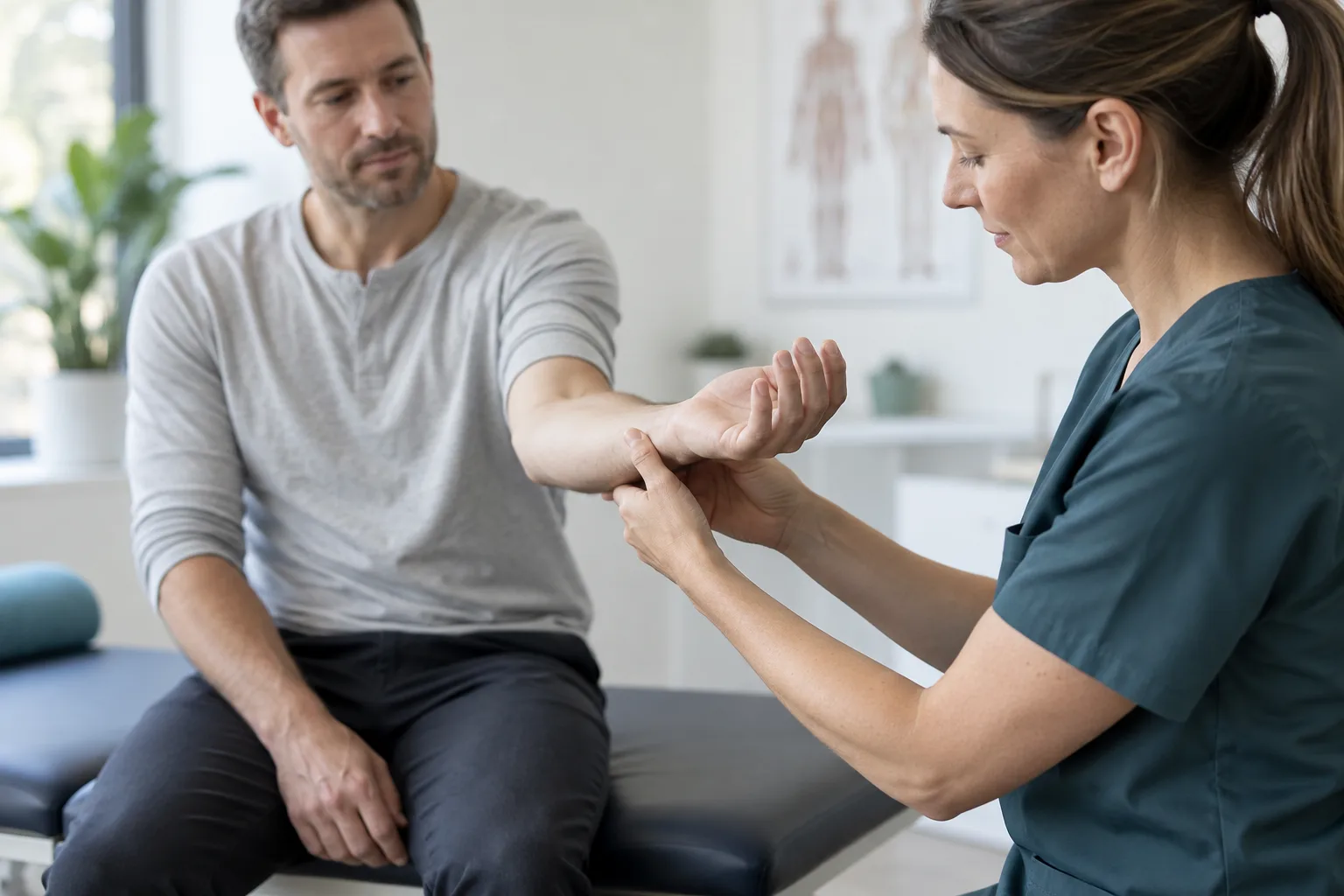
Understanding elbow sprain
An elbow sprain damages the ligaments that support the joint. It can follow a fall, a sports injury or a movement that takes the elbow beyond its usual range.
Treatment and care
Treatment often involves protection, symptom management and gradual rehabilitation. More severe ligament injuries or continuing instability may need specialist treatment.
Questions to discuss with your clinician
Use this guide to prepare for an individual discussion. The right next step depends on your diagnosis and circumstances.
- What findings support this diagnosis, and could another condition explain my symptoms?
- Do I need any investigations before choosing treatment?
- Which options are suitable, and what are their benefits and risks?
- What changes should prompt another assessment?
- How will the condition affect everyday activities and follow-up?
Common questions
What symptoms are common?
Pain, swelling, bruising and restricted movement can occur. An examination helps distinguish a sprain from a fracture or other injury.
Does a sprain require surgery?
Most do not. Surgery may be considered for significant instability or an injury that does not respond to appropriate non-surgical care.