
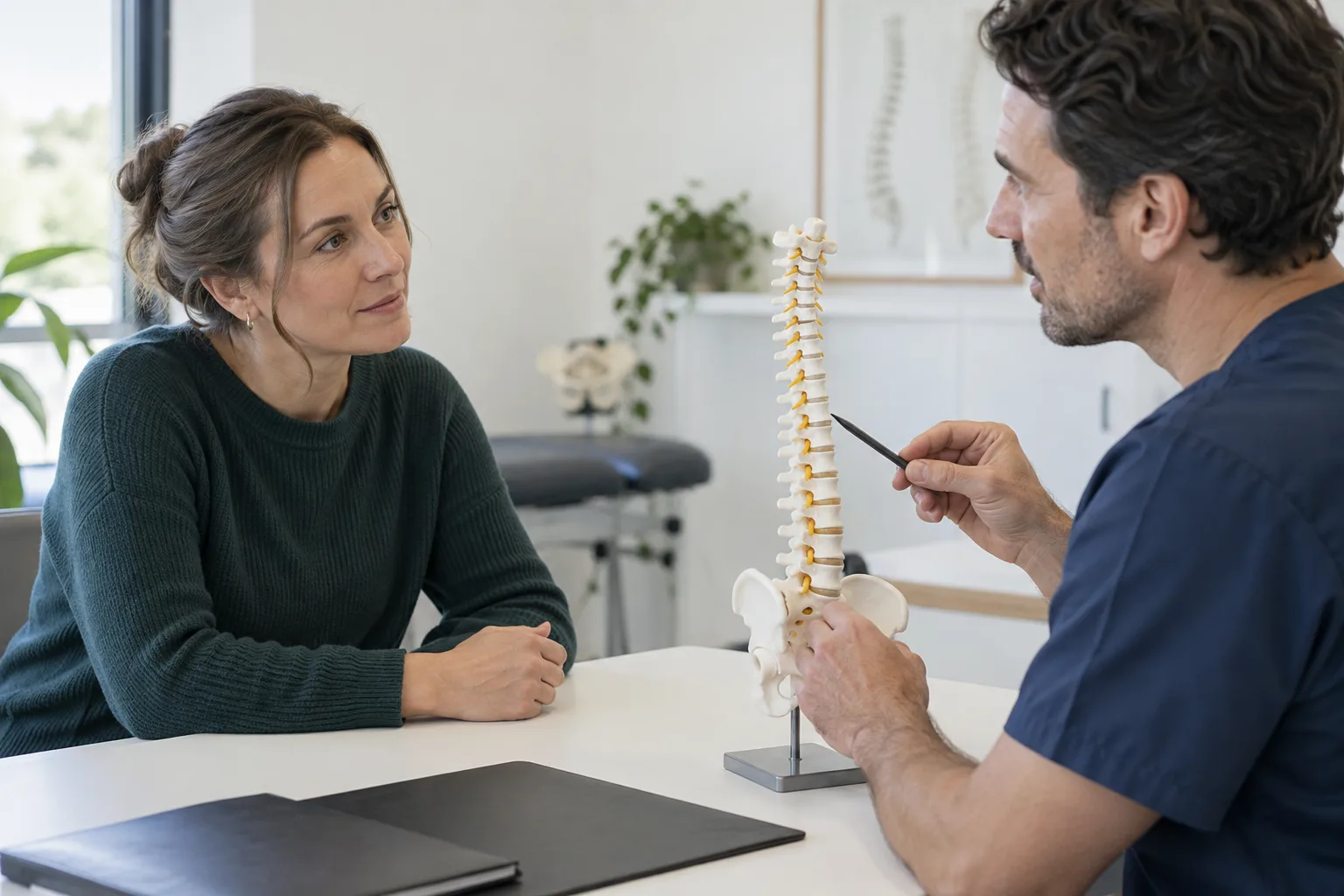
Understanding scoliosis
Scoliosis is a sideways curve of the spine with rotation of the vertebrae. Adolescent idiopathic scoliosis commonly appears during growth, although other forms occur.
Treatment and care
Treatment may involve observation, bracing or surgery, depending on the curve and its progression. Regular reviews help track changes while a child is growing.
Questions to discuss with your clinician
Use this guide to prepare for an individual discussion. The right next step depends on your diagnosis and circumstances.
- What findings support this diagnosis, and could another condition explain my symptoms?
- Do I need any investigations before choosing treatment?
- Which options are suitable, and what are their benefits and risks?
- What changes should prompt another assessment?
- How will the condition affect everyday activities and follow-up?
Common questions
What signs might be noticed?
Uneven shoulders, an uneven waist or ribs that appear more prominent on one side can prompt an assessment.
Is scoliosis caused by poor posture?
Adolescent idiopathic scoliosis is not caused by poor posture or carrying a schoolbag. In many cases there is no single known cause.