
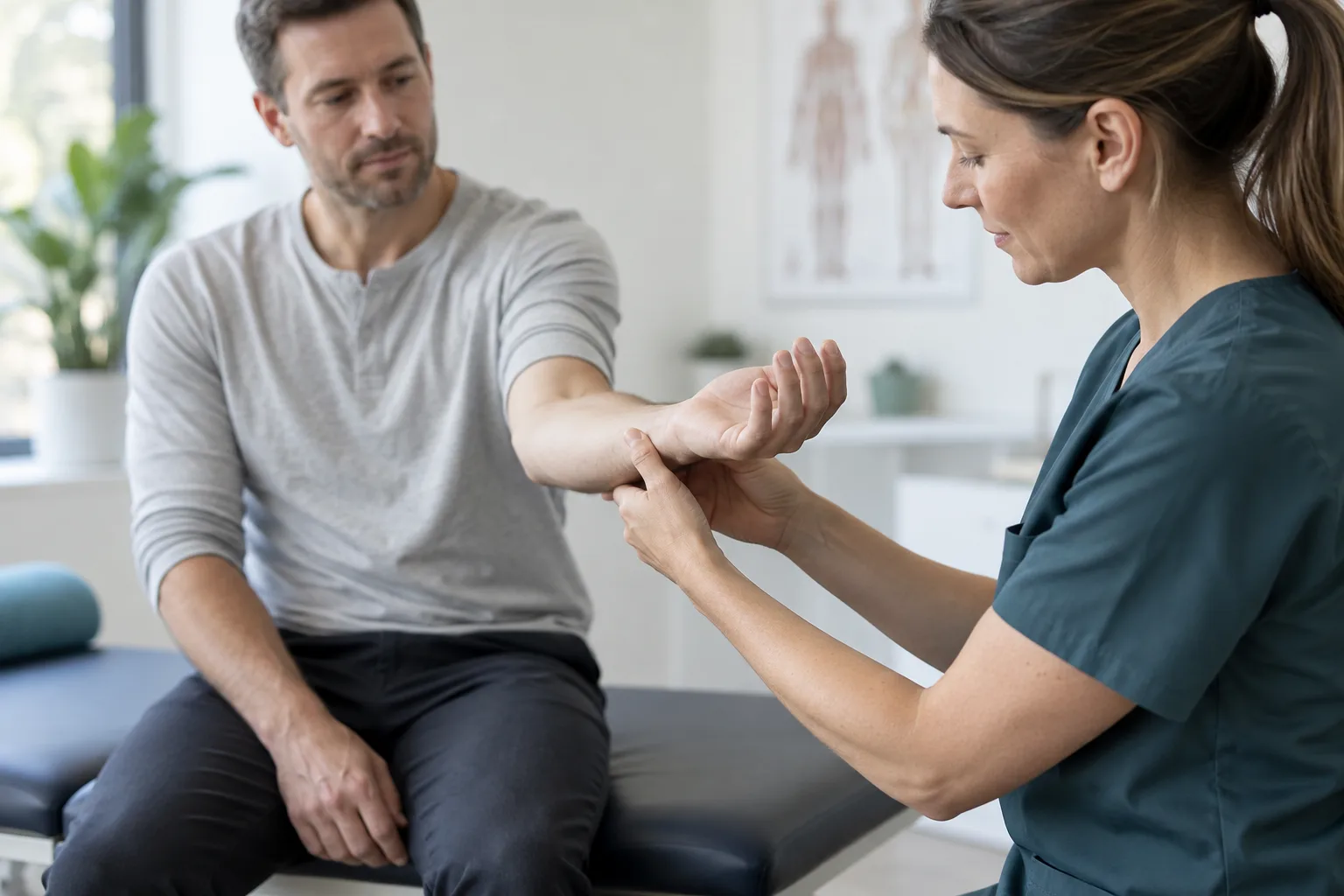
Understanding orthopaedic trauma
Orthopaedic trauma includes fractures, dislocations and injuries to muscles, tendons and ligaments. The severity and structures involved determine the treatment required.
Treatment and care
Management may involve splints or casts, surgical repair and rehabilitation. Follow-up checks healing, movement and the effect of the injury on everyday function.
Questions to discuss with your clinician
Use this guide to prepare for an individual discussion. The right next step depends on your diagnosis and circumstances.
- What findings support this diagnosis, and could another condition explain my symptoms?
- Do I need any investigations before choosing treatment?
- Which options are suitable, and what are their benefits and risks?
- What changes should prompt another assessment?
- How will the condition affect everyday activities and follow-up?
Common questions
Which injuries need emergency care?
Open fractures, obvious deformity, loss of circulation or sensation, and severe uncontrolled pain need urgent medical assessment.
What happens after initial treatment?
Your team will explain follow-up imaging, movement restrictions and rehabilitation appropriate to the injury.