
Can an Orthopedic Doctor Treat Sciatica?
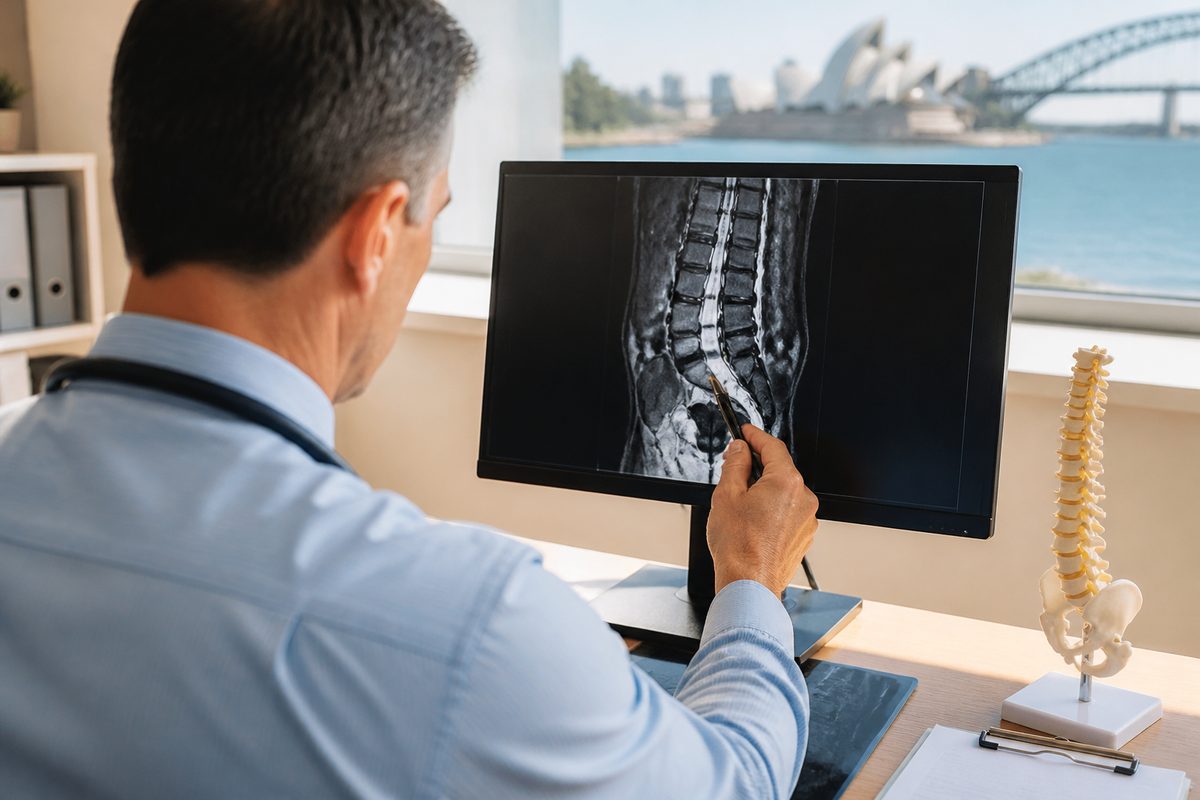
Yes, an orthopedic doctor can treat sciatica, and for many people it is a sensible first stop. Orthopedists work on the bones, discs, joints and nerves of the back and legs. Sciatica usually starts in that exact area, so they can examine you, find the cause and talk through the full range of treatment.
The choice matters most if you think you might want a surgical opinion. An orthopedist can discuss surgery and also the non-surgical options that come first for most people. Ask them to cover both. A good visit ends with you knowing what is causing your pain and what each option would involve.
What is actually going on when you have sciatica?
Sciatica is not a diagnosis by itself. It is a name for pain that runs along the path of the sciatic nerve. That nerve starts in the lower back, passes through the buttock and travels down the back of the leg. When something irritates or squeezes it, you feel the problem far from its source.
The most common source is a herniated disc in the lumbar vertebrae, the stacked bones of the lower spine. The disc is a soft cushion between two bones. If part of it bulges out, it can press on a nearby nerve root. The result is often sharp, burning or electric leg pain, sometimes with tingling or numbness in the foot.
Doctors call this kind of pain neuropathic pain, meaning it comes from a damaged or irritated nerve rather than from a strained muscle. That is why sciatica can feel so different from ordinary back pain. You may feel more discomfort in your leg than in your back. Sitting, coughing or bending forward can make it worse.
Picture someone who lifts a heavy box, feels a twinge, and two days later has a hot line of pain running to the ankle. Nothing is wrong with the leg. The trouble sits higher up, in the spinal column, where a nerve is being pinched. Treating the leg alone would miss the point.
Why does an orthopedist fit this problem so well?
Your spine, discs, muscles and nerves all belong to the human musculoskeletal system. That whole system is the orthopedist's home ground. They are trained to ask which structure in the chain is failing and why.
This matters because sciatica has several possible causes. A disc is the most common one, but it is not the only one. A doctor who sees mechanical spine problems every day is well placed to tell them apart.
Orthopedists also work across the full treatment ladder. They can start with simple measures, move to injections and refer you for surgery if that becomes the right step. Some do the operations themselves. Others work closely with spine surgeons. Either way, you are not starting from scratch if your pain does not settle.
What will an orthopedist actually do for sciatica?
They start with a hands-on examination
A careful physical examination comes first. The doctor checks how you stand and walk. They test the strength in your legs, your reflexes and the feeling in your skin. They may raise your straight leg while you lie down to see if it reproduces the pain. These simple tests often point to which nerve root is involved.
They order tests when the picture is unclear
An MRI shows discs and nerves clearly and can confirm a herniation. An X-ray shows the bones. If the diagnosis is still uncertain, the doctor may order a nerve conduction study. This test measures how well electrical signals travel along a nerve. It can show whether a nerve is damaged and roughly where.
Scans do not replace the exam. Many people have disc bulges on an MRI and feel nothing. The doctor matches what the scan shows to what you feel. If the two agree, the diagnosis is solid.
They set up non-surgical treatment first
Most sciatica is managed without an operation at the start. Therapy usually begins with activity changes, anti-inflammatory medicine and a structured exercise plan. Your orthopedist will often refer you to a physical therapist, because guided movement and strengthening help many people recover. If pain stays high, they can offer an epidural steroid injection, which places anti-inflammatory medicine near the irritated nerve.
They can discuss surgery when it fits
Orthopedic surgery enters the conversation when pain is severe, lasts a long time, or comes with growing weakness. The usual operation for a herniated disc removes the part of the disc pressing on the nerve. Spinal fusion, which joins two vertebrae together, is a bigger procedure and is used for specific problems such as an unstable segment. It is not the standard answer to sciatica from a disc.
Trials have tested both surgery and non-surgical care, including epidural steroid injections, for sciatica caused by a herniated lumbar disc. That review compared treatments, not specialists, and the excerpt available gives no numbers on how much each option helped. So the honest takeaway is simple: both paths are real options, and the right one depends on your scan and symptoms.
When should you pick an orthopedist as your first stop?
Choose an orthopedist if your leg pain is strong, if it has not eased after a few weeks of self-care, or if you already suspect a disc problem. Choose one if you want a surgeon's view early. Choose one if you want a single doctor who can handle both the exam and the next step.
You do not need to wait until things are desperate. People often put off a visit because they assume the answer will be surgery. In most cases the first plan is conservative. The visit gives you information, and information lowers the fear.
When might another specialist suit you better?
This part is my own reasoning, not a study result. Different doctors lean toward different tools, so the best match depends on what you want to explore.
- A physiatrist focuses on non-surgical rehabilitation and injections, so they suit you if you want to avoid an operation.
- A neurologist focuses on nerve disease, so they suit you if the cause is unclear or you have widespread nerve symptoms.
- A neurosurgeon operates on the spine and nerves, so they suit you if surgery is already likely.
- A physical therapist guides recovery through movement and can often be seen directly, depending on where you live.
These roles overlap. Many orthopedists work with every one of these professionals. Whoever you pick, ask them to explain all of your options, including the non-surgical ones. If their answer sounds like only one door is open, get a second opinion.
Could something other than a disc be causing your leg pain?
Yes, and this is where many articles go wrong. They treat every leg pain as a slipped disc. A good doctor does not.
Spinal stenosis is one common cause. It means the canal that holds the nerves has narrowed, often with age. It tends to cause leg pain and heaviness when you stand or walk, and it eases when you sit or lean forward. Treatment differs from a disc problem, so the right diagnosis changes the plan.
Piriformis syndrome is another. The piriformis is a small muscle deep in the buttock, and the sciatic nerve runs close to it. If the muscle tightens or spasms, it can irritate the nerve and mimic disc-related sciatica. The spine looks normal in this case, so scans of the back may come back clear. A thorough exam is what catches it.
Hip problems and joint pain in the pelvis can also send pain down the leg. This is another reason to see someone who looks at the whole system rather than guessing from the symptom.
Which symptoms mean you should not wait for an appointment?
A few signs call for urgent care, not a routine booking. Go to an emergency department if you notice any of these:
- Numbness in the groin or inner thighs, the area that would touch a saddle.
- New trouble passing urine, or loss of bladder or bowel control.
- Weakness in both legs that is getting worse.
- Sudden foot drop, where the foot catches or slaps as you walk.
These can signal cauda equina syndrome. The cauda equina is the bundle of nerve roots at the bottom of the spinal column, and it looks like a horse's tail, which is where the name comes from. When disc material or another cause squeezes that bundle, delay can lead to lasting damage. Treatment is usually emergency surgery, so speed matters more than choosing the perfect specialist.
How do you get the most from the visit?
Go in with clear answers. Doctors make better decisions when the story is precise.
- Write down when the pain began and what you were doing.
- Note exactly where it travels, and whether you feel numbness or tingling.
- List what makes it better or worse, such as sitting, walking or coughing.
- List what you have already tried, including medicines and exercises.
Bring any past scans or reports. Wear clothing you can move in, because the exam involves bending, lifting your legs and walking. Then ask direct questions. What do you think is causing this? What are my non-surgical options? What would make you suggest surgery? What warning signs should send me back?
If the doctor suggests an injection or an operation, ask what result to expect and how long recovery takes. Ask what happens if you wait. A confident doctor answers plainly.
What should you do next?
Book the visit with an orthopedist if your leg pain is strong, has lasted more than a few weeks, or you want a surgeon's input early. Before you go, write down your symptoms and bring any scans. At the appointment, ask the doctor to walk you through every option, starting with the non-surgical ones. If any urgent warning sign appears first, skip the booking and go to emergency care today.
An orthopedic doctor can evaluate and treat sciatica, particularly when the pain stems from a spinal or musculoskeletal cause such as a herniated disc or spinal stenosis. After examining symptoms and ordering imaging if needed, they often recommend conservative care first, including physical therapy to improve flexibility, strengthen supporting muscles and ease pressure on the irritated nerve. If symptoms persist or worsen, the orthopedic doctor can discuss other options, including injections or surgical referral, based on the underlying cause.