
Using this resource
This guide explains the topic in more detail so you can prepare for a discussion about your own care. Individual instructions from your treating team take priority.
A hip replacement is intended to provide lasting relief and improved function. Many remain in place for 15 to 20 years or longer, but there is no expiry date that applies to every implant and no guaranteed lifespan for an individual patient.
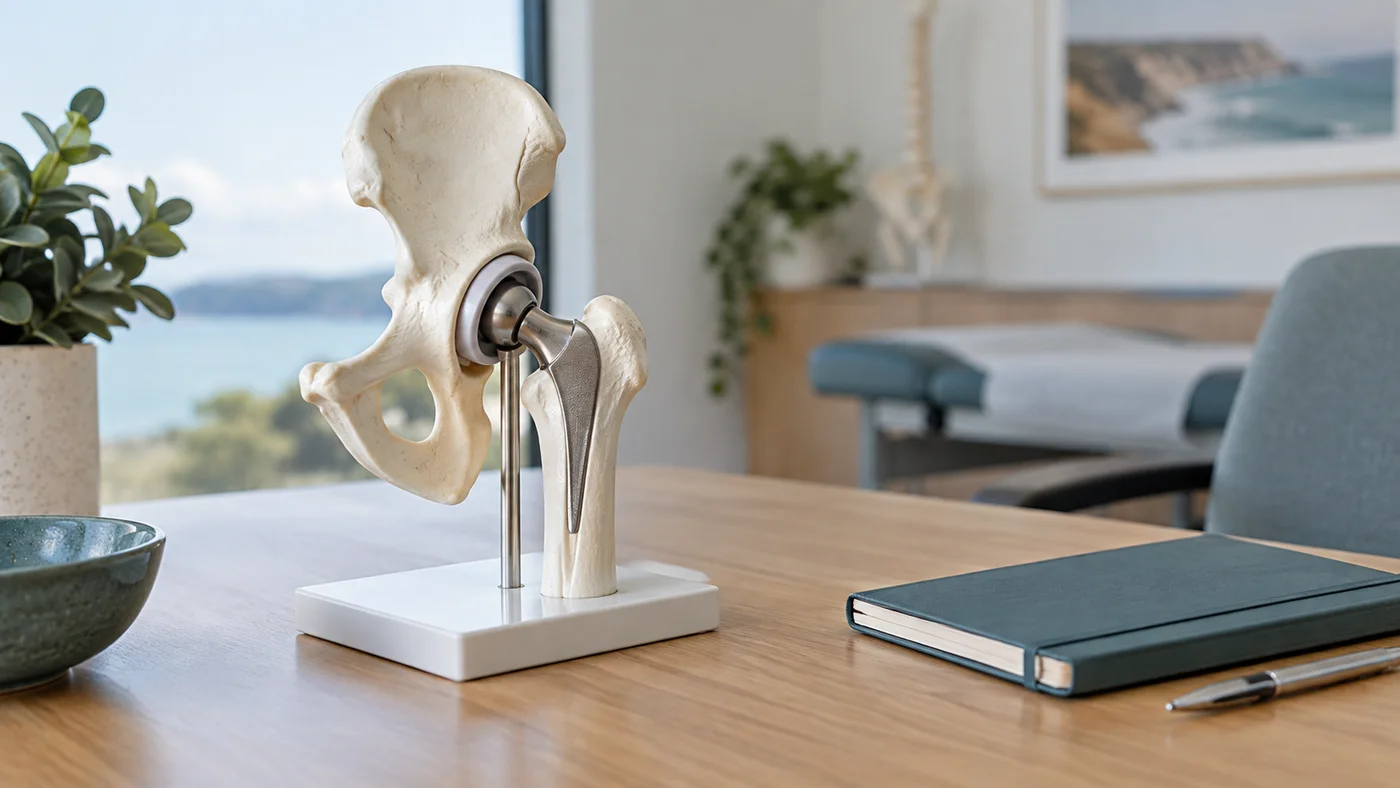
What does lasting mean?
When surgeons discuss implant longevity, they often refer to whether the replacement has needed revision surgery. That is different from saying that every person has no pain or limitation throughout that time.
The muscles, tendons and other structures around the hip can still develop problems. New symptoms deserve assessment even when the implant itself has been functioning well.
Why might a replacement need further surgery?
Wear or loosening can develop over time. Other problems, such as infection, instability or a fracture around the implant, may also lead to further treatment. These do not all occur on the same timetable.
The type of implant, the condition of the bone and the person’s circumstances influence long-term care. Your surgeon can explain which considerations are relevant to the replacement recommended for you.
What is revision hip replacement?
Revision hip replacement is surgery to replace or address one or more components of an existing artificial hip. It may be more complex than the first operation because the surgeon needs to assess the implant, surrounding bone and the reason for the problem.
Further surgery is a possibility rather than an inevitable event. Ask about the expected follow-up for your implant and what would prompt additional investigations.
Pay attention to changes
Report new or increasing pain, a change in walking, instability or other persistent symptoms. Keep a record of when the change started and whether there was an injury or illness around that time.
Continue the review schedule recommended by your treating team, even if recovery has gone well. Retain details of the operation and implant where available, particularly if you move or change healthcare providers.
Plan activity for the longer term
Discuss the activities you want to return to and any modifications that may be appropriate. The aim is to remain active within advice suited to the replacement and your overall health, rather than avoid movement out of fear of wearing it out.
Understanding hip replacement longevity
Dr Daniel Mandziak discusses the intended lifespan of hip replacement and the possibility of revision surgery.
Explore our guide to total hip replacement and hip care services.
Questions to consider
- Which information in this resource applies to my situation?
- Has the advice, service or research described changed since it was published?
- Which questions should I take to my treating clinician?