
Using this resource
This guide explains the topic in more detail so you can prepare for a discussion about your own care. Individual instructions from your treating team take priority.
Patient-specific instrumentation uses information about your anatomy to prepare guides for an operation. It is one method a surgeon may consider when planning joint replacement, especially when the shape or alignment of a joint needs careful assessment.
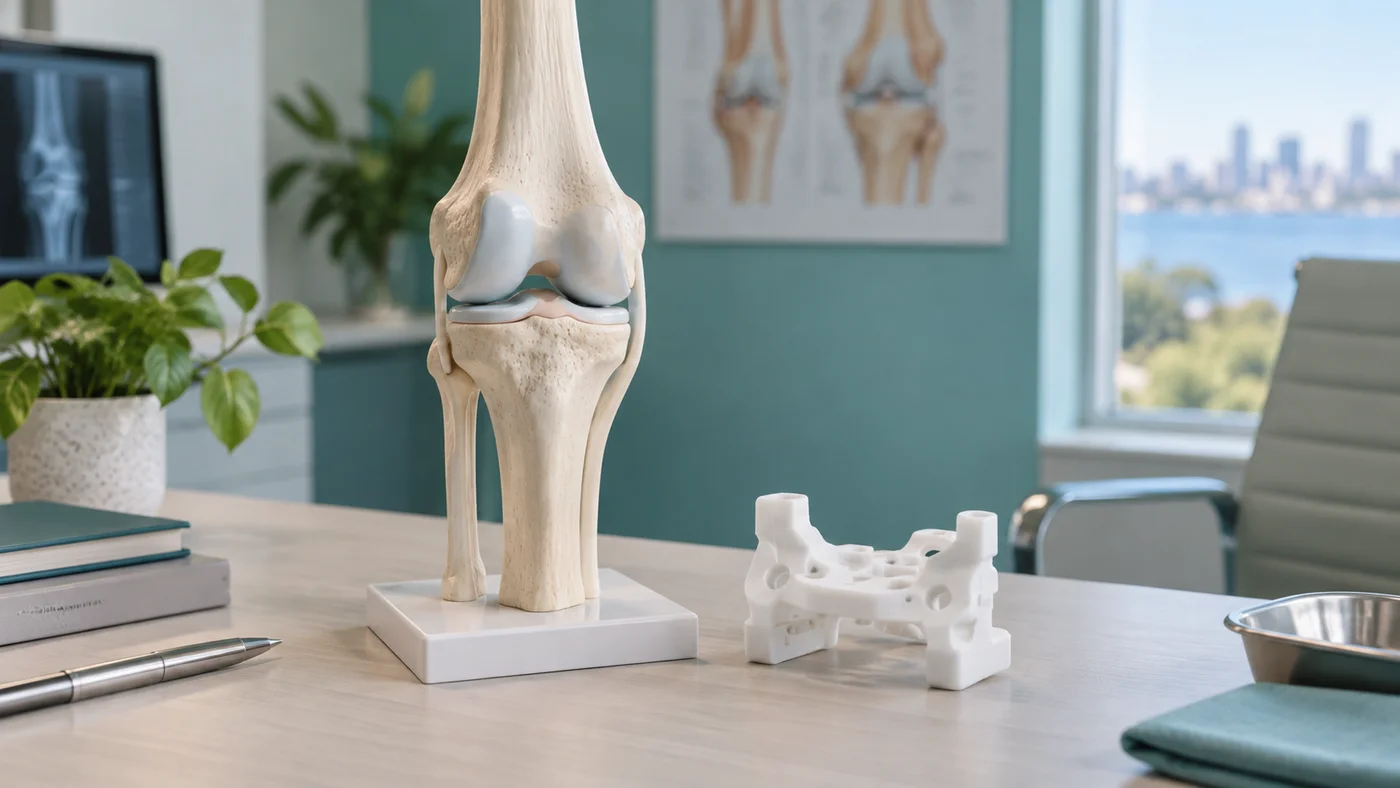
From a scan to a surgical plan
Depending on the system, CT or MRI scans are used to create a model of the joint. The surgeon can review the anatomy and plan aspects of implant placement before the operation.
Custom guides are then manufactured to fit planned locations on the bone. Their purpose is to help transfer the pre-operative plan into the operating theatre.
What do the guides replace?
Conventional joint replacement uses alignment instruments and anatomical landmarks. Patient-specific guides offer a different way to assist selected steps. The surgeon still checks the plan and makes decisions during the procedure.
The guides are instruments used for surgery. They are not necessarily a personalised implant that stays in the body. Ask which parts of your procedure are custom-made and which are standard components.
Why might the technique be considered?
Differences in anatomy or joint deformity can make planning more involved. Your surgeon may find a patient-specific plan useful in those circumstances. That does not mean everyone needs custom guides or that they guarantee a better result.
Discuss the intended benefit for your joint. Precision in planning is one consideration; comfort, movement, complications and the overall recovery remain important outcomes.
How is this different from robotic assistance?
Patient-specific instrumentation and robotic assistance are different tools. One uses guides prepared for the individual anatomy, while robotic systems can assist planning and selected tasks through their own technology. The exact process varies between systems.
Neither term describes a complete recovery plan. The choice should fit the procedure and the surgeon’s assessment rather than follow a technology preference alone.
Questions before proceeding
Ask whether additional scans are needed, how long planning takes and whether there are extra costs. It is also useful to understand what happens if the surgeon needs to change the plan during the operation.
Bring these questions to your consultation so the proposed instruments are explained as part of the whole treatment.
How custom alignment guides are prepared
Dr Meng Ling explains how imaging and pre-operative planning can be used to create patient-specific surgical guides.
Read about joint replacement techniques or visit Dr Meng Ling’s profile.
Questions to consider
- Which information in this resource applies to my situation?
- Has the advice, service or research described changed since it was published?
- Which questions should I take to my treating clinician?