
Using this resource
This guide explains the topic in more detail so you can prepare for a discussion about your own care. Individual instructions from your treating team take priority.
A child’s fracture can turn everyday routines into new questions. Can the cast get wet? What helps with discomfort? When should you call the treating team? Understanding how a synthetic cast works makes it easier to care for your child while the injury heals.
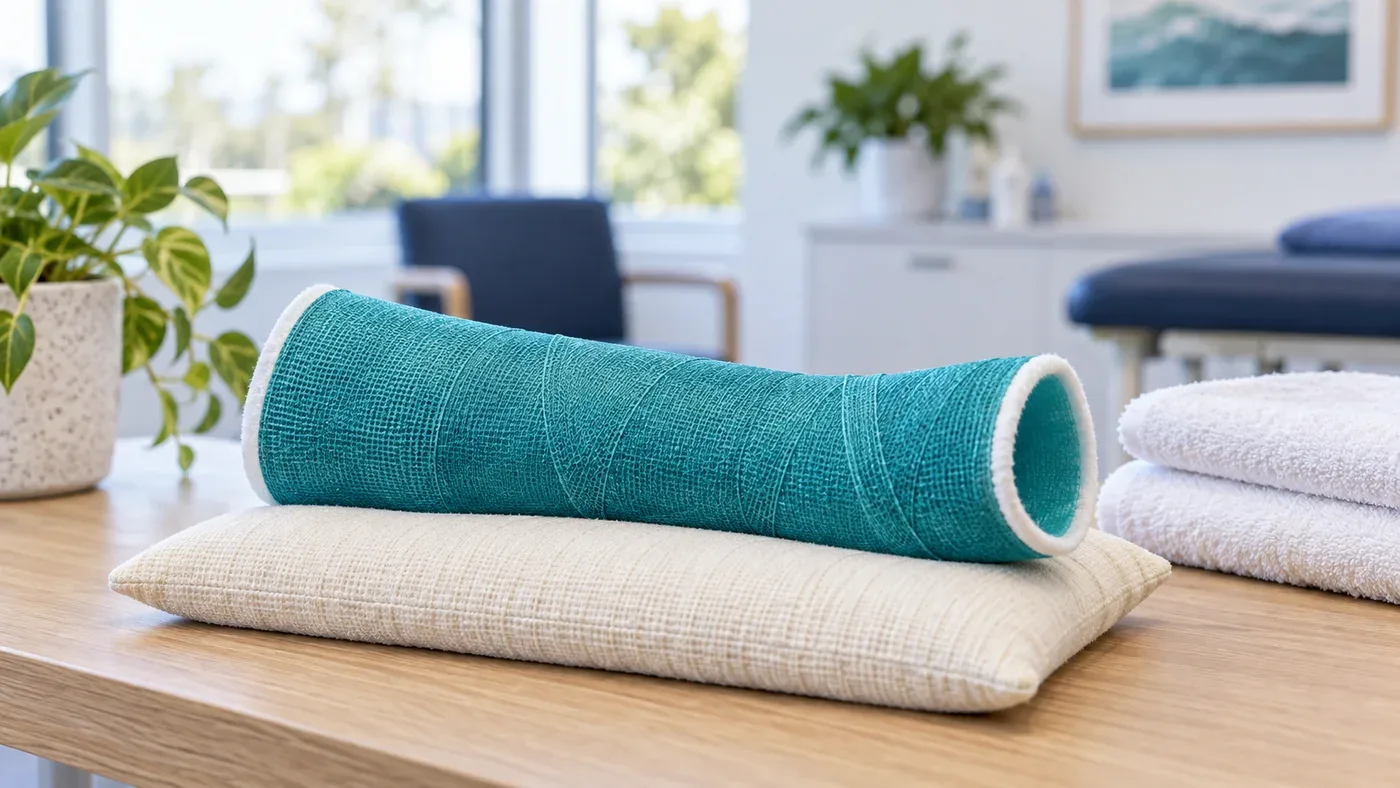
Synthetic casts provide firm support around an injured limb. They can offer a lighter alternative to traditional plaster, but their care requirements depend on the material, lining and the injury being treated.
What is a synthetic cast?
A synthetic cast is a rigid support used to protect and hold an injured limb in position. During application, a clinician places a stockinette and protective padding around the area before applying the casting material in layers. The cast and its lining are selected to suit the injury.
Synthetic casts are generally lighter than traditional plaster casts and may feel less bulky during everyday activities. Some materials also allow greater breathability, and casts are available in different colours. A lighter cast still needs to fit properly. Padding, swelling and pressure around the edges all affect comfort, so report discomfort to the treating team.
Can a synthetic cast get wet?
A synthetic cast should get wet only when the treating team has confirmed that both the cast and its lining are water-resistant. A synthetic outer shell does not automatically mean the padding underneath can safely get wet.
Check your child’s individual instructions before showering or swimming. If the cast is confirmed to be water-resistant, follow the treating team’s advice about rinsing and draining it. Otherwise, keep it dry and contact the team if water gets inside.
A useful question before leaving: “Can this cast and its padding get wet, and what should we do if that happens?”
Looking after the cast at home
Follow the written instructions supplied by your treating team. General care includes:
- Support the injured limb on a pillow and keep it raised as advised to help reduce swelling.
- Keep objects, sand, powders, creams and oils out of the cast. Never put anything inside to scratch an itch.
- Check the skin around the edges and encourage finger or toe movement if your clinician has said this is appropriate.
- Use slings or walking aids as directed, and attend the arranged follow-up appointments.
When to seek help
Seek urgent medical assessment if fingers or toes become pale or blue, cold, numb or difficult to move, or your child develops severe or increasing pain. Raise the limb while arranging help. These symptoms need prompt attention.
Contact your treating team if the cast cracks, becomes soft, slips, feels too tight or loose, develops a bad smell, or causes skin irritation. Do not cut, alter or remove it yourself.
Planning school, activities and follow-up care
Ask when your child can return to school, sport and other activities, and when the cast needs checking or removing. Keep those instructions with your appointment details so anyone caring for your child can follow the same plan.
How a synthetic cast is applied
A cast application demonstration with Professor Peter Cundy. Water immersion is suitable only for a cast and lining confirmed to be water-resistant by the treating team.
For related information, explore paediatric fractures and our cast-care resources.
Questions to consider
- Which information in this resource applies to my situation?
- Has the advice, service or research described changed since it was published?
- Which questions should I take to my treating clinician?