
Using this resource
This guide explains the topic in more detail so you can prepare for a discussion about your own care. Individual instructions from your treating team take priority.
A shoulder dislocation can leave more than short-term pain. Some people recover good stability with rehabilitation, while others experience repeated slipping or another dislocation. Understanding your injury helps guide the next steps.
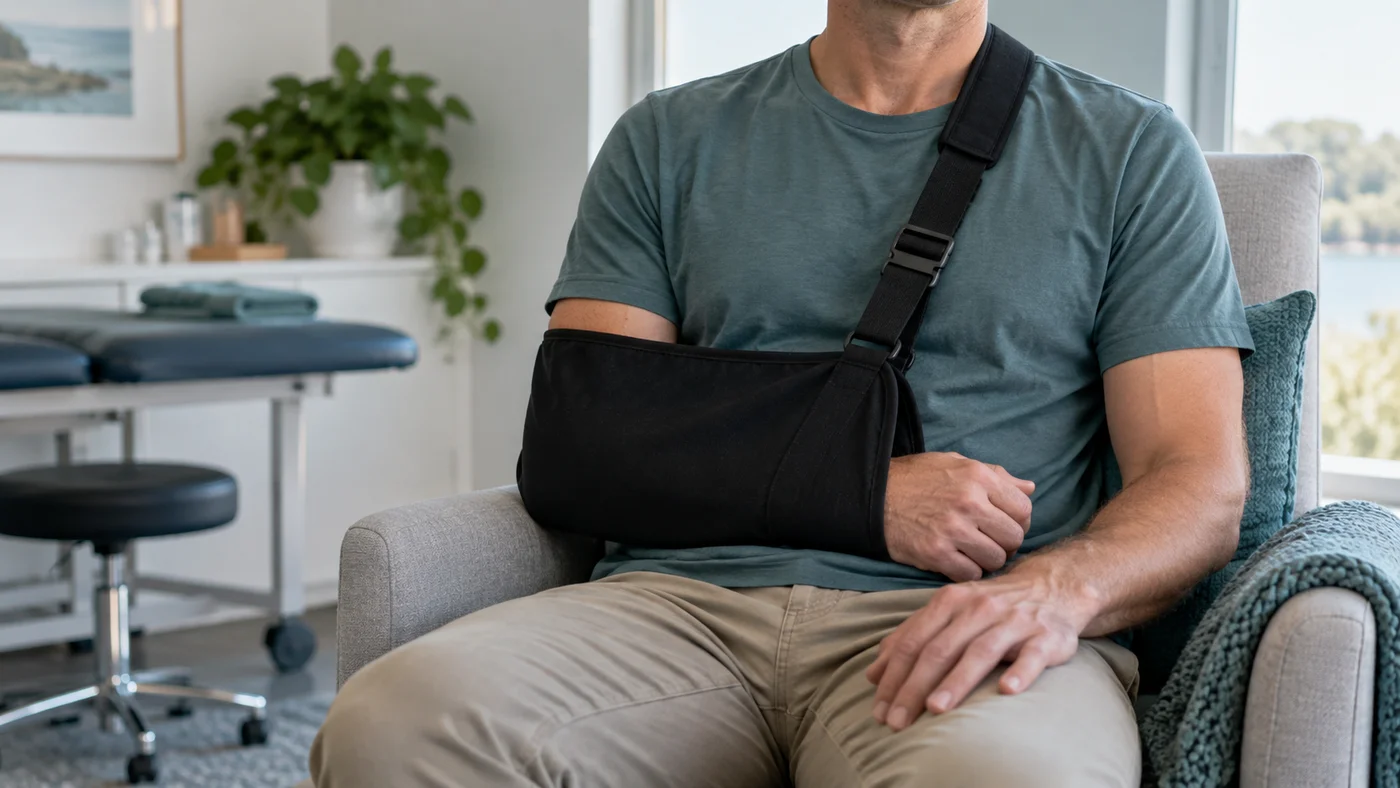
What happens when a shoulder dislocates?
A dislocation occurs when the ball of the upper arm comes out of its socket. The injury can stretch or tear the tissues that help hold the joint in place, including the ligaments and the rim of cartilage called the labrum.
A shoulder that is currently out of joint needs urgent medical treatment. Do not try to force it back into place yourself. Assessment also checks for associated injury to bone, tendons, nerves or blood vessels.
Who is more likely to have another dislocation?
The chance of recurrence varies. Younger people and those returning to contact or overhead sport may face a higher risk, but age alone does not determine the outcome. The extent of tissue damage, any bone loss and the demands placed on the shoulder are also important.
After the initial injury has been treated, a shoulder assessment can help explain your individual risk. Tell your clinician about previous episodes, a feeling that the shoulder may slip and the movements you have started avoiding.
The role of rehabilitation
Physiotherapy aims to restore movement, strength and control around the shoulder. Exercises and activity changes are matched to the injury and stage of recovery. Returning straight to strenuous activity because the pain has settled may expose the joint to demands it is not yet ready to manage.
Follow the advice about sling use, movement and progression. A clear rehabilitation plan also helps identify persistent weakness or instability that needs reassessment.
When stabilisation surgery may help
Surgery may be considered for recurrent dislocations or selected first-time injuries where the risk of further instability is high. The operation depends on the structures involved. Some procedures repair damaged soft tissue, while significant bone loss may require a different approach.
Ask your surgeon how treatment could affect work, sport and recovery time. Surgery involves rehabilitation too, and the decision should reflect both the injury and your goals.
Persistent weakness deserves attention
Not every problem after a dislocation is repeated instability. In some patients, particularly older adults, an associated rotator cuff injury can contribute to ongoing weakness. Difficulty lifting the arm or symptoms that are not improving should be reviewed rather than assumed to be routine recovery.
Understanding shoulder instability
An overview of recurrent shoulder instability and associated tendon injuries. Recurrence risk and treatment choices vary with the individual injury.
Learn about rotator cuff tears and returning to sport after shoulder surgery.
Questions to consider
- Which information in this resource applies to my situation?
- Has the advice, service or research described changed since it was published?
- Which questions should I take to my treating clinician?